

By clicking “Accept All Cookies” you agree to the storing of cookies on your device to enhance site navigation, analyze site usage, and assist in our marketing efforts.
Privacy PolicyiPSC Cell Therapy Market (By Application: Drug Discovery & Toxicology, Regenerative Medicine; By Derived Cell Type (Lineage): Cardiomyocytes (Heart Cells), Neurons/Neural Progenitors; By Therapy Type: Allogeneic (Off-the-shelf), Autologous (Patient-specific); By End-user: Pharmaceutical & Biotech Companies, Academic and Research Institutes; By Region: North America, Europe, Asia-Pacific, LAMEA) Industry Size, Share, Growth, Trends 2026 to 2035.

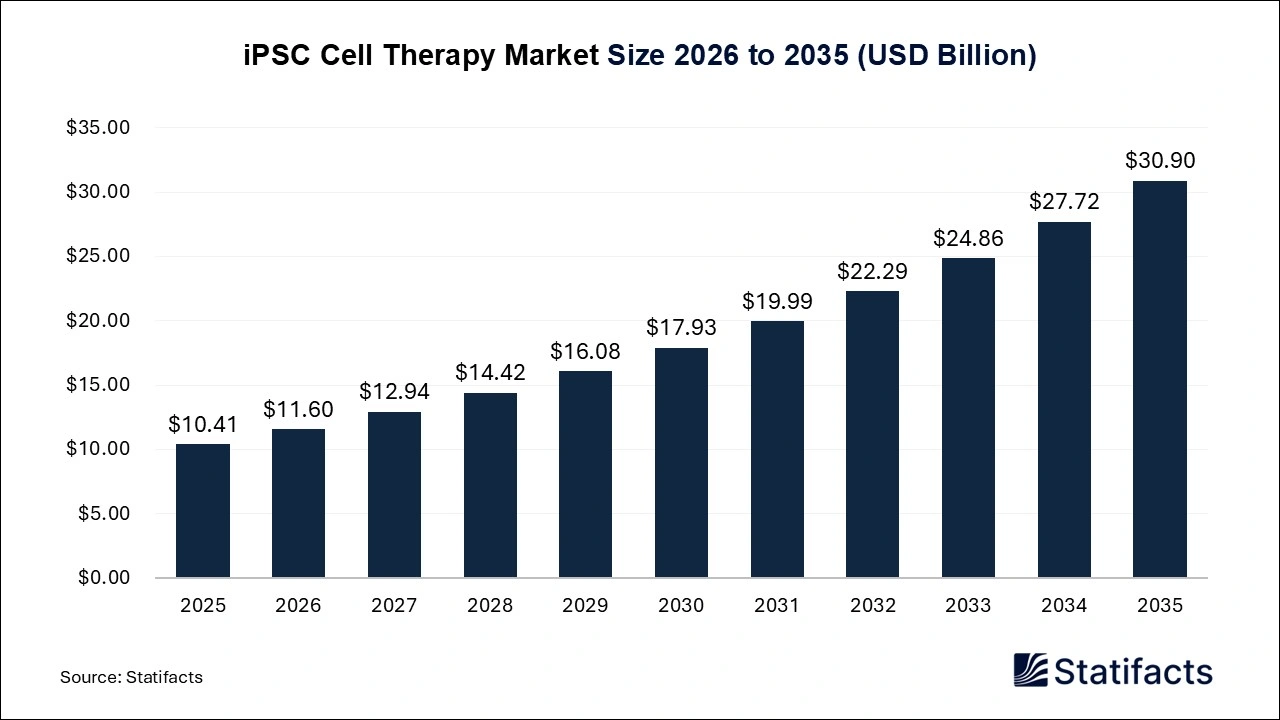
The global iPSC cell therapy market was valued at USD 10.41 billion in 2025 and is projected to reach approximately USD 30.90 billion by 2035, expanding at a CAGR of 11.5%. Growth is driven by advances in regenerative medicine, rising clinical applications, and increasing investment in stem cell research.
| Reports Attributes | Statistics |
| Market Size in 2025 | USD 10.41 Billion |
| Market Size in 2026 | USD 11.60 Billion |
| Market Size in 2032 | USD 22.29 Billion |
| Market Size by 2035 | USD 30.90 Billion |
| CAGR 2026 to 2035 | 11.50% |
| Base Year | 2025 |
| Forecast Period | 2026 to 2035 |
The affordable off-the-shelf allogeneic therapies and automated manufacturing align best with the 3D bioreactor systems transition. The iPSC cell therapy market gives a restart to the adult somatic cells in an embryonic form. This enables the cells to spot differences in all cell types, which further recreates the diseased tissues. The market is a brief example of an accurate personalised idea for the corrupted cell replacement performing commendably in retinal, Parkinson’s, and diabetes diseases.
| Segments | Shares (%) |
| North America | 40% |
| Europe | 27% |
| Asia Pacific | 23% |
| LAMEA | 10% |
| Segments | Shares (%) |
| Drug Discovery & Toxicology | 32% |
| Regenerative Medicine | 36% |
| Disease Modeling | 20% |
| Tissue Engineering | 12% |
| Segments | Shares (%) |
| Cardiomyocytes | 26% |
| Neurons / Neural Progenitors | 24% |
| Hepatocytes | 18% |
| Hematopoietic / Immune Cells | 20% |
| Fibroblasts / Keratinocytes | 12% |
| Segments | Shares (%) |
| Allogeneic | 62% |
| Autologous | 38% |
| Segments | Shares (%) |
| Pharmaceutical & Biotech Companies | 55% |
| Academic & Research Institutes | 30% |
| CROs & CDMOs | 15% |
Published by Ajit Bansod

| Application | 2025 | 2026 | 2027 | 2028 | 2029 | 2030 | 2031 | 2032 | 2033 | 2034 | 2035 |
|---|---|---|---|---|---|---|---|---|---|---|---|
| Drug Discovery & Toxicology | 3.33 | 3.69 | 4.09 | 4.53 | 5.02 | 5.56 | 6.16 | 6.82 | 7.56 | 8.37 | 9.28 |
| Regenerative Medicine | 3.75 | 4.21 | 4.74 | 5.32 | 5.99 | 6.73 | 7.56 | 8.50 | 9.55 | 10.73 | 12.06 |
| Disease Modeling | 2.08 | 2.32 | 2.58 | 2.86 | 3.19 | 3.54 | 3.94 | 4.38 | 4.87 | 5.42 | 6.03 |
| Tissue Engineering | 1.25 | 1.39 | 1.54 | 1.71 | 1.90 | 2.11 | 2.34 | 2.60 | 2.88 | 3.20 | 3.56 |
| Therapy Type | 2025 | 2026 | 2027 | 2028 | 2029 | 2030 | 2031 | 2032 | 2033 | 2034 | 2035 |
|---|---|---|---|---|---|---|---|---|---|---|---|
| Allogeneic | 6.45 | 7.24 | 8.13 | 9.12 | 10.23 | 11.48 | 12.88 | 14.45 | 16.21 | 18.19 | 20.41 |
| Autologous | 3.96 | 4.36 | 4.81 | 5.31 | 5.86 | 6.46 | 7.12 | 7.85 | 8.65 | 9.54 | 10.51 |
| Region | 2025 | 2026 | 2027 | 2028 | 2029 | 2030 | 2031 | 2032 | 2033 | 2034 | 2035 |
|---|---|---|---|---|---|---|---|---|---|---|---|
| North America | 4.16 | 4.61 | 5.10 | 5.64 | 6.24 | 6.91 | 7.64 | 8.45 | 9.35 | 10.34 | 11.44 |
| Europe | 2.81 | 3.12 | 3.47 | 3.85 | 4.28 | 4.75 | 5.28 | 5.87 | 6.52 | 7.24 | 8.04 |
| Asia Pacific | 2.39 | 2.71 | 3.07 | 3.47 | 3.93 | 4.44 | 5.02 | 5.68 | 6.42 | 7.25 | 8.19 |
| LAMEA | 1.04 | 1.17 | 1.31 | 1.46 | 1.64 | 1.84 | 2.06 | 2.31 | 2.59 | 2.90 | 3.25 |
| Subsegment | 2025 | 2026 | 2027 | 2028 | 2029 | 2030 | 2031 | 2032 | 2033 | 2034 | 2035 |
|---|---|---|---|---|---|---|---|---|---|---|---|
| Drug Discovery & Toxicology | 3.33 | 3.69 | 4.09 | 4.53 | 5.02 | 5.56 | 6.16 | 6.82 | 7.56 | 8.37 | 9.28 |
| Regenerative Medicine | 3.75 | 4.21 | 4.74 | 5.32 | 5.99 | 6.73 | 7.56 | 8.50 | 9.55 | 10.73 | 12.06 |
| Disease Modeling | 2.08 | 2.32 | 2.58 | 2.86 | 3.19 | 3.54 | 3.94 | 4.38 | 4.87 | 5.42 | 6.03 |
| Tissue Engineering | 1.25 | 1.39 | 1.54 | 1.71 | 1.90 | 2.11 | 2.34 | 2.60 | 2.88 | 3.20 | 3.56 |
| Subsegment | 2025 | 2026 | 2027 | 2028 | 2029 | 2030 | 2031 | 2032 | 2033 | 2034 | 2035 |
|---|---|---|---|---|---|---|---|---|---|---|---|
| Allogeneic | 6.45 | 7.24 | 8.13 | 9.12 | 10.23 | 11.48 | 12.88 | 14.45 | 16.21 | 18.19 | 20.41 |
| Autologous | 3.96 | 4.36 | 4.81 | 5.31 | 5.86 | 6.46 | 7.12 | 7.85 | 8.65 | 9.54 | 10.51 |
| Subsegment | 2025 | 2026 | 2027 | 2028 | 2029 | 2030 | 2031 | 2032 | 2033 | 2034 | 2035 |
|---|---|---|---|---|---|---|---|---|---|---|---|
| North America | 4.16 | 4.61 | 5.10 | 5.64 | 6.24 | 6.91 | 7.64 | 8.45 | 9.35 | 10.34 | 11.44 |
| Europe | 2.81 | 3.12 | 3.47 | 3.85 | 4.28 | 4.75 | 5.28 | 5.87 | 6.52 | 7.24 | 8.04 |
| Asia Pacific | 2.39 | 2.71 | 3.07 | 3.47 | 3.93 | 4.44 | 5.02 | 5.68 | 6.42 | 7.25 | 8.19 |
| LAMEA | 1.04 | 1.17 | 1.31 | 1.46 | 1.64 | 1.84 | 2.06 | 2.31 | 2.59 | 2.90 | 3.25 |
To get full access to our Market Insights, you need a Professional Account or a Business Suite.
You will receive an email from our Business Development Manager. Please be sure to check your SPAM/JUNK folder too.
Our customers work more efficiently and benefit from

