

Share


Wind Turbine Rotor Houses Market (By Type: 3MW Wind Turbine Rotor Houses, 6MW Wind Turbine Rotor Houses, 7-12MW Wind Turbine Rotor Houses, 12-15MW Wind Turbine Rotor Houses; By Application: Onshore Wind Turbines, Offshore Wind Turbines; By Region: North America, Europe, Asia-Pacific, Latin America, Middle East and Africa) Industry Size, Share, Growth, Trends 2026 to 2035.

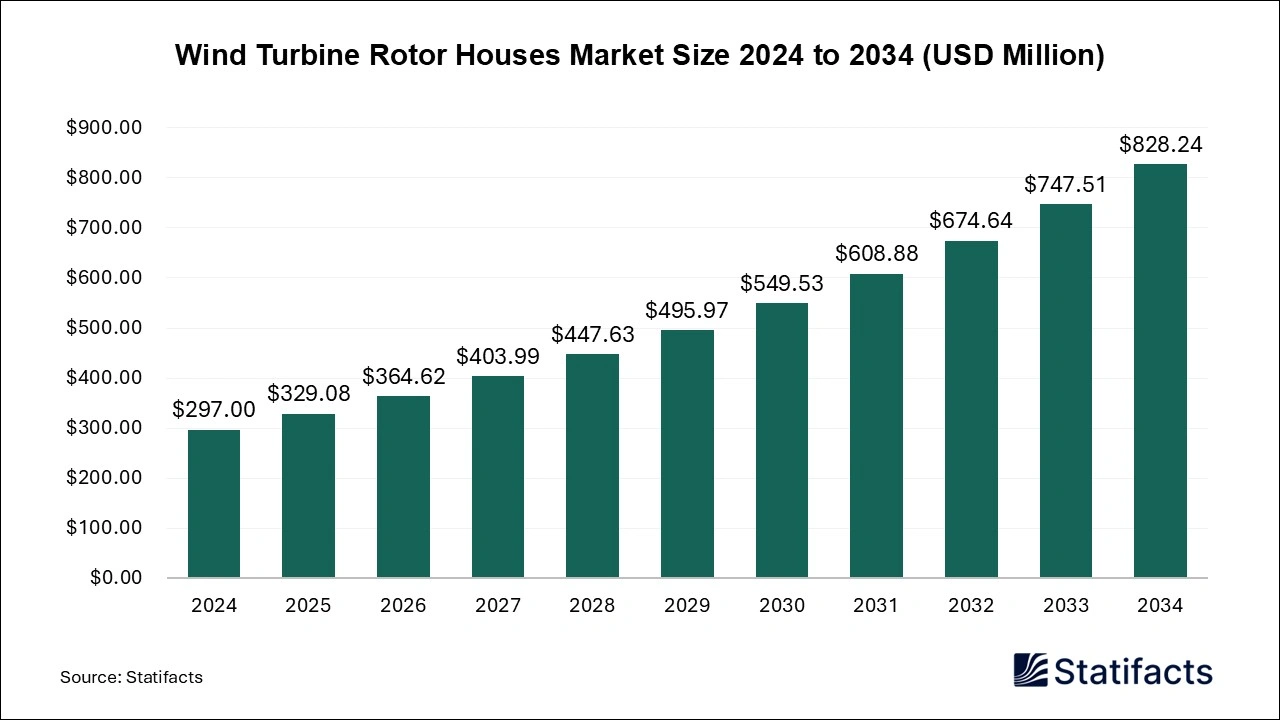
The global wind turbine rotor houses market, valued at USD 329.08 million in 2025, is projected to reach USD 903.73 million by 2035, growing at a CAGR of 10.8% driven by the rising demand for renewable energy and advancements in wind turbine technology.
| Reports Attributes | Statistics |
| Market Size in 2025 | USD 329.08 Million |
| Market Size in 2026 | USD 364.62 Million |
| Market Size in 2032 | USD 674.64 Million |
| Market Size by 2035 | USD 903.73 Million |
| CAGR 2026 to 2035 | 10.63% |
| Base Year | 2025 |
| Forecast Period | 2026 to 2035 |
The increasing adoption of modular nicelle and standardized housing units has gained a major industry share in recent years. Furthermore, the shorter assembly time and minimizing installation risk are likely to push industry growth in the coming years.
Additionally, the development of hybrid housing, which incorporates metals, composites, and built-in sensors, is expected to create lucrative opportunities for manufacturers in the coming years, as per expectations. Moreover, the manufacturer can find industry growth in some offerings, such as housing, like service-ready products or pre-wired ones, which may facilitate strategic positioning for manufacturers' firms in the future, as per recent industry observations.
Factors such as certification hurdles, transportation logistics, and manufacturing scale limitations are expected to slow industry growth in the coming years. Also, several high-precision castings or composite shells have been seeking skilled labor and large facilities in recent years. However, technology integration can help manufacturers to these growth barriers in the coming years, where the smart hybrid housing is expected to gain major industry attention. Also, the manufacturer can develop composite skin bonded to metal frames with included fiber sensors, which is expected to provide them with a sophisticated consumer base in the future.
| Regions | Shares (%) |
| North America | 25% |
| Asia Pacific | 32% |
| Europe | 30% |
| LAMEA | 13% |
| Segments | Shares (%) |
| 3MW Wind Turbine Rotor Houses | 40% |
| 6MW Wind Turbine Rotor Houses | 30% |
| 7-12MW Wind Turbine Rotor Houses | 20% |
| 12-15MW Wind Turbine Rotor Houses | 10% |
| Segments | Shares (%) |
| Onshore Wind Turbines | 70% |
| Offshore Wind Turbines | 30% |





