

Share


Probiotic Drinks Market (By Type: Dairy-based Drinks and Juice and Tea Drinks; By Application: Online Sales and Offline Sales; By Region: North America, Europe, Asia Pacific, and LAMEA) Industry Size, Share, Growth, Trends 2026 to 2035

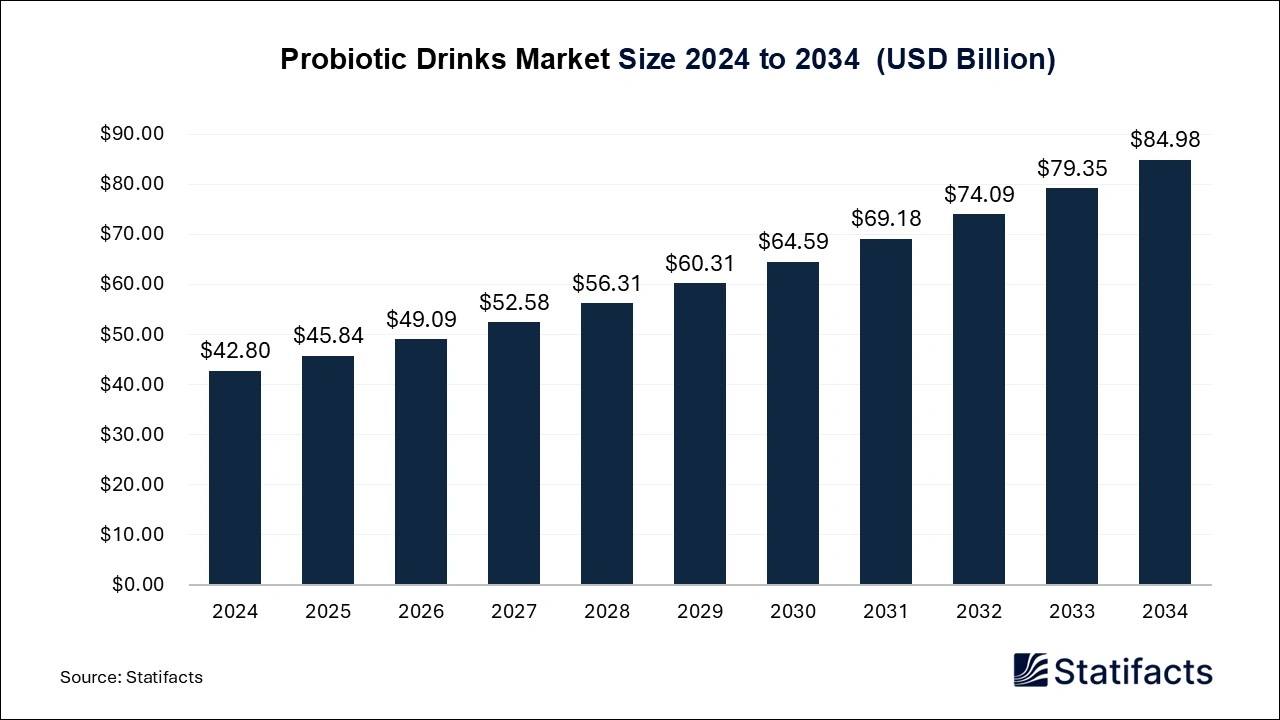
The global probiotic drinks market, valued at USD 45.84 billion in 2025, is projected to reach nearly USD 90.36 billion by 2035. Driven by rising consumer interest in gut health, broader functional beverage adoption, and product innovation that combines flavors, strains, and clinically backed health claims to appeal to mainstream and wellness-focused buyers.
| Reports Attributes | Statistics |
| Market Size in 2025 | USD 45.84 Billion |
| Market Size in 2026 | USD 49.09 Billion |
| Market Size in 2032 | USD 74.09 Billion |
| Market Size by 2035 | USD 90.36 Billion |
| CAGR 2025 to 2035 | 7.02% |
| Base Year | 2025 |
| Forecast Period | 2026 to 2035 |
Consumers are increasingly seeking functional beverages that support digestion, immunity, and overall wellness. Probiotic drinks offer an accessible, ready-to-drink format that can be positioned as everyday health support. Growth in health awareness, expanding retail and e-commerce distribution, and product diversity across dairy and non-dairy bases are major factors. The category also benefits from rising healthcare costs, as consumers turn toward preventive nutrition.
Dairy-based probiotic drinks remain large, but non-dairy and kombucha-style formats are expanding fast. Flavored and fortified products, single-serve packaging, and chilled distribution are common. Retail channels include supermarkets, convenience stores, and direct-to-consumer online sales, which help smaller brands scale. Marketing emphasizing digestive wellness, skin health, and immune support continues to shape product launches.
Regulatory scrutiny on health claims, variability of clinical evidence across strains, and cold-chain distribution requirements for live cultures create hurdles. Price sensitivity in some regions and competition from supplements and fermented foods also influence adoption. Supply chain issues, especially around live bacterial stability, pose additional manufacturing challenges.
R&D into strain-specific benefits, shelf-stable formulations, and synbiotic combinations (probiotics plus prebiotics) is expanding product opportunities. Companies are investing in fermentation technology that improves bacterial survival without refrigeration. Packaging innovations that maintain live culture viability are also being tested. Beyond consumer-facing products, business-to-business demand is growing as food and beverage manufacturers incorporate probiotic cultures into broader product lines, and hospitality and quick-service segments offer functional beverage options. Private-label players are entering the space with lower-cost offerings, widening the market footprint but increasing competition.
Distribution and education efforts matter. Brands that invest in clinical studies, transparent labeling, and clear usage guidance tend to win consumer trust. Collaboration with dietitians and healthcare professionals strengthens credibility and helps differentiate premium offerings. Meanwhile, emerging markets show rising interest as disposable income grows and urban retail access expands.
With strong consumer interest in gut and immune health, plus ongoing product innovation and broader retail reach, the probiotic drinks market is set for robust expansion. Quality control, validated health claims, and affordable formats will determine which players lead as the category scales. As functional beverages continue to merge with lifestyle trends, probiotic drinks are likely to become a staple in daily nutrition for health-conscious consumers.
| Regions | Shares (%) |
| North America | 30% |
| Asia Pacific | 35% |
| Europe | 15% |
| LAMEA | 20% |
| Segments | Shares (%) |
| Dairy-based Drinks | 30% |
| Juice and Tea Drinks | 70% |
| Segments | Shares (%) |
| Online Sales | 20% |
| Offline Sales | 80% |
Published by Vidyesh Swar
Related Reports





