



Asia Pacific Generic Drugs Market (By Drug Type: Simple Generics, Super Generics; By Brand: Pure Generic Drugs, Branded Generic Drugs; By Route of Drug Administration: Oral, Injection, Cutaneous, Others; By Therapeutic Application: Central Nervous System (CNS), Cardiovascular, Infectious Diseases, Musculoskeletal Diseases, Respiratory, Oncology, Others; By Distribution Channel: Retail Pharmacy, Hospital Pharmacy, Online and Others) Industry Size, Share, Growth, Trends 2026 to 2035

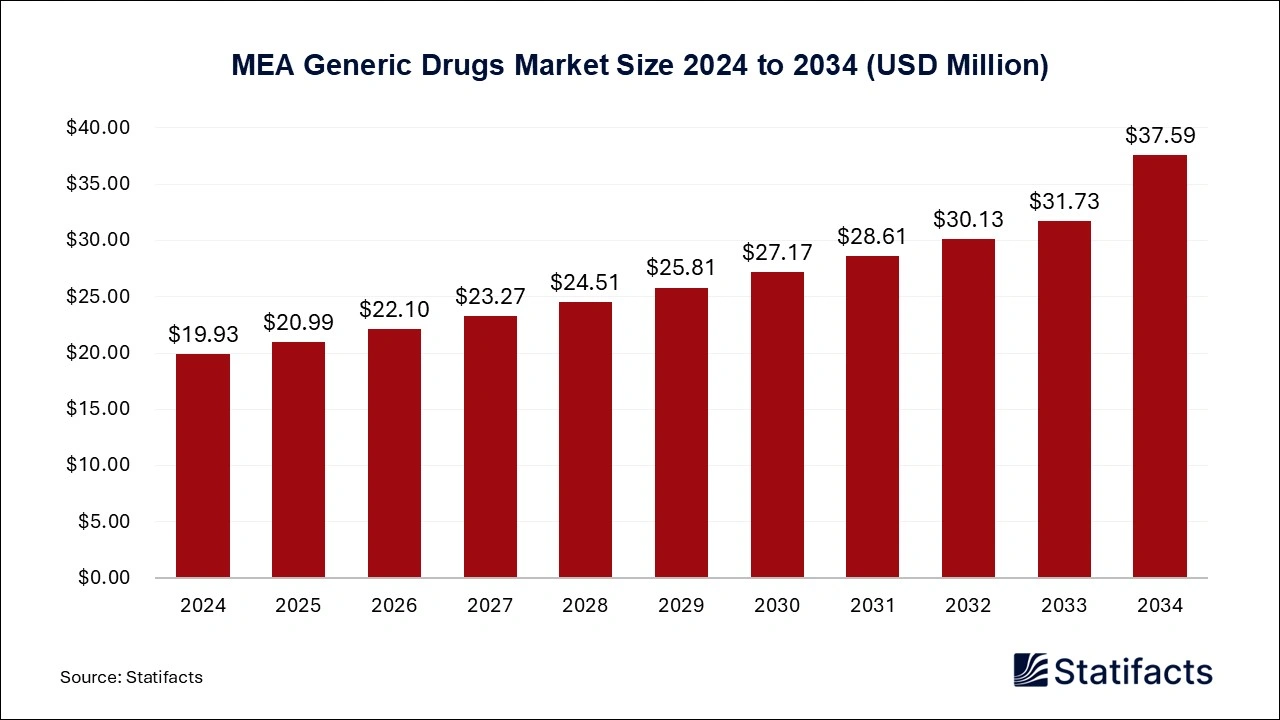
The MEA generic drugs market was valued at USD 20.99 million in 2025 and is forecast to reach nearly USD 40.61 million by 2035, expanding at a 6.82% CAGR, supported by rising healthcare access, cost-effective medication demand, and government reforms.
| Reports Attributes | Statistics |
| Market Size in 2025 | USD 20.99 Million |
| Market Size in 2026 | USD 22.1 Million |
| Market Size in 2032 | USD 30.13 Million |
| Market Size by 2035 | USD 40.61 Million |
| CAGR 2026 to 2035 | 6.82% |
| Base Year | 2025 |
| Forecast Period | 2026 to 2035 |
The Middle East and Africa generic drugs market is expanding at a decent pace, driven by the growing number of communicable and non-communicable diseases, which create a long-term demand for low-cost medications. The region's higher healthcare costs also support the growth of generic drug manufacturing, enabling individuals to access affordable medications. The procurement agencies and health ministries in the region are adopting programs and initiatives to eliminate the need for expensive healthcare services for patients. The growing investment in semi-urban areas is also a crucial factor, as governments are promoting the use of generic drugs in public and private healthcare settings. The willingness to use generic drugs is also experiencing demand as individuals have to pay out-of-pocket charges.
The Middle East and Africa a developing regions, where a majority of the population still lacks adequate knowledge of generic and branded drugs, which can create challenges in their adoption rate. Moreover, this can create safety challenges for the population and delay consumer adoption. The region also imports a higher number of API, which can face challenges due to shipping delays and other complications. The lower distribution rate in rural areas may also make it harder to attract foreign investment.
The developing countries in the MEA region are highly committed to improving local manufacturing, reducing import dependency, and fostering growth in the pharmaceutical sector. The government incentives and public-private partnerships are expected are imply a higher number of medications in hospitals in the form of injectables and tablets. Insurance partnerships with the private sector are also likely to increase the use of generic drugs in urban healthcare settings. The growing urbanization is also improving e-pharmacy practices in these settings, thereby increasing the frequency and volume of generic drugs.
The Middle East and Africa region is highly integrating technologies such as Artificial Intelligence AI and Machine Learning ML into its healthcare practices, enabling the monitoring of manufacturing sites to ensure accurate medications. These countries are attracting foreign investment in technologies that can better monitor supply-chain demand. The use of AI in developing personalized medicine for patients with a specific profile will also help minimize errors during these procedures.
Saudi Arabia is a crucial player in the Middle East and Africa generic drugs market due to its vast healthcare infrastructure, which drives strong demand for generics. Many healthcare reforms in the country are taking place in line with financial independence in the coming years. Increased focus from authorities such as the Saudi Food and Drug Authority (SFDA) is also expected to help the country expand the user base for generic drugs. The rise of diabetes and cardiovascular disorders in the country is expected to boost the demand for long-term medications that are budget-friendly.
The United Arab Emirates (UAE) is one of the opportunistic regions in the Middle East and Africa market due to the increasing healthcare advancements for the middle-class population. Private players in the country are driving significant healthcare expenditure, which may be financially unaffordable for some, and could create a new user base for generic drugs. The increasing prevalence of chronic diseases in the region is also expected to drive the government’s focus towards affordable and sustainable initiatives, which will also improve public confidence over time.
| Segments | Shares (%) |
| Simple Generics | 49.63% |
| Super Generics | 50.37% |
| Segments | Shares (%) |
| Pure generic drugs | 42.19% |
| Branded generic drugs | 57.81% |
| Segments | Shares (%) |
| Oral | 29.47% |
| Injection | 26.33% |
| Cutaneous | 23.51% |
| Others | 20.69% |
| Segments | Shares (%) |
| Central Nervous System (CNS) | 14.52% |
| Cardiovascular | 13.96% |
| Infectious Diseases | 19.73% |
| Musculoskeletal Diseases | 15.02% |
| Respiratory | 14.15% |
| Oncology | 12.77% |
| Others | 10.85% |
| Segments | Shares (%) |
| Retail Pharmacy | 37.04% |
| Hospital Pharmacy | 34.19% |
| Online and Others | 28.77% |
Published by Deepa Pandey





