



Europe Corporate Wellness Market (By Service: Fitness, Health Risk Assessment, Health Screening, Smoking Cessation, Stress Management, Nutrition & Weight Management, Others; By Category: Psychological Therapists, Fitness & Nutrition Consultants, Organizations/Employers; By Delivery Model: Offsite, Onsite; By End-use: Large Scale Organizations, Medium Scale Organizations, Small Scale Organizations) Industry Size, Share, Growth, Trends 2026 to 2035

The Europe corporate wellness market was valued at USD 20.43 billion in 2025 and is expected to surge to nearly USD 40.47 billion by 2035, growing at a 7.07% CAGR, driven by rising workplace wellbeing programs, mental health focus, and employee productivity initiatives.
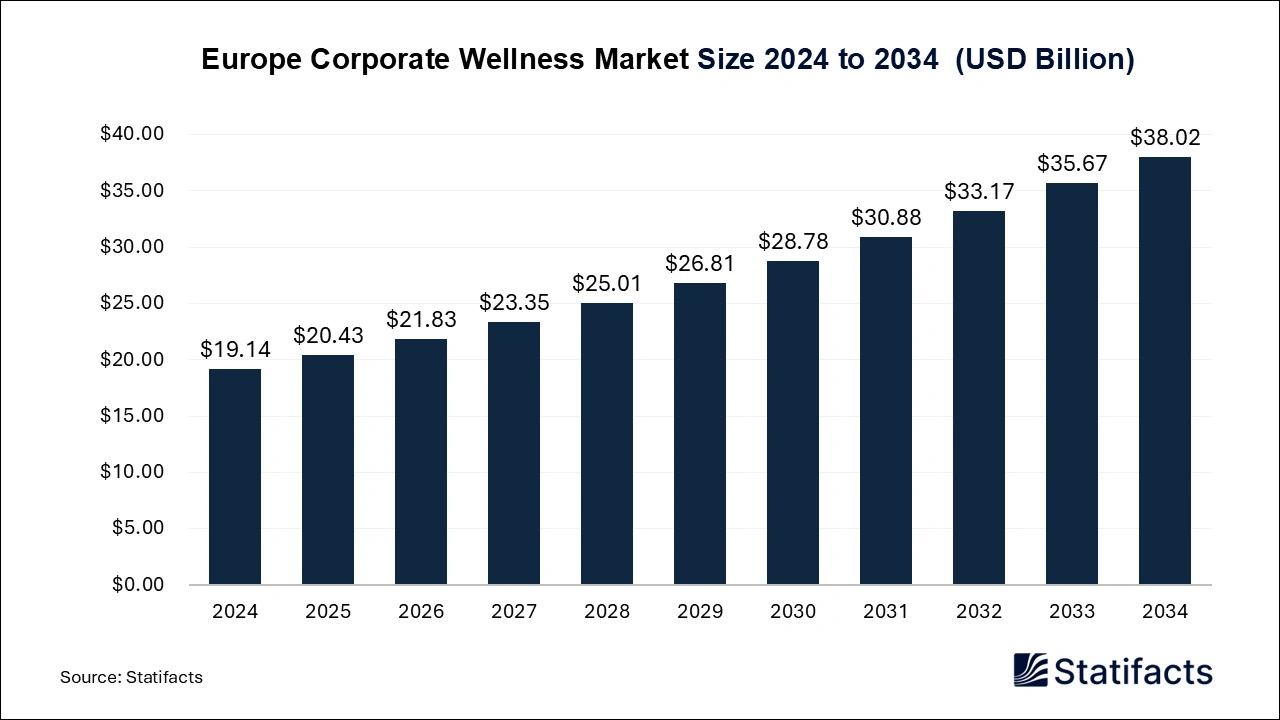
| Reports Attributes | Statistics |
| Market Size in 2025 | USD 20.43 Billion |
| Market Size in 2026 | USD 21.83 Billion |
| Market Size in 2032 | USD 33.17 Billion |
| Market Size by 2035 | USD 40.47 Billion |
| CAGR 2026 to 2035 | 7.07% |
| Base Year | 2025 |
| Forecast Period | 2026 to 2035 |
Demand in Europe is increasing because the region has some of the strongest workforce-protection frameworks globally. The European Agency for Safety and Health at Work highlights that employers must follow strict guidelines for workplace stress management, ergonomic safety and psychosocial risk assessment. This regulatory foundation makes corporate wellness a structural necessity rather than a discretionary benefit. As more companies recognise the link between employee wellbeing and productivity, wellness programs increasingly include mental health counselling, ergonomic interventions, fitness incentives and digital wellbeing tools.
Mental health is a central driver. The WHO Mental Health Atlas (2023) noted that European countries reported some of the highest rates of workplace stress globally. Employers are responding by integrating digital behavioural health platforms, resilience training, confidential counselling services and hybrid wellbeing programs that support both onsite and remote workers. Chronic disease prevention also remains a priority, with many companies implementing health-risk assessments, vaccination drives, smoking-cessation programs and nutrition initiatives. Digital transformation supports these efforts through telehealth, wellness apps and wearables that enable personalised health feedback.
Despite strong regulatory support, the market faces challenges related to cost, cultural variation and inconsistent employer adoption. Many small and medium enterprises do not have the same budgetary flexibility as large organisations, limiting their ability to adopt comprehensive wellness programmes. A 2022 OECD report on workplace wellbeing noted that SMEs often face difficulties in justifying upfront investment when results are gradual and long term.
Data privacy is another concern across Europe. The General Data Protection Regulation places strict limits on how employers collect and manage health-related information. As a result, adoption of digital wellness platforms and wearable integration sometimes moves slowly due to concerns about compliance and employee trust. Cultural stigma around mental health remains a barrier in several countries, especially in Southern and Eastern Europe, requiring more awareness initiatives and training for managers to support employee wellbeing effectively.
Europe shows significant variation in market maturity. Western and Northern Europe lead in adoption due to strong occupational health frameworks, higher employer spending and widespread mental health awareness. Countries such as Germany, France, the Netherlands and the Nordic region have well-developed wellness ecosystems supported by national guidelines and employer incentives. These countries also have strong digital infrastructure, enabling adoption of virtual fitness programmes, behavioural health apps and AI-driven wellbeing platforms.
Southern and Eastern European countries are growing quickly but from a smaller base. Expansion in these regions is driven by increasing awareness, rising chronic disease prevalence and the entry of multinational corporations offering standardized wellness packages. Public health systems in these regions also encourage workplace participation in screening campaigns and preventive health efforts. However, smaller organisations often lag due to financial and digital barriers.
Germany holds a strong position due to its robust occupational health regulations and high employer spending on preventive care. The Federal Institute for Occupational Safety and Health has long promoted stress prevention, ergonomic safety and mental health interventions at work. Employers increasingly integrate digital mental health tools, structured wellness coaching and ergonomics programs to reduce musculoskeletal issues and stress-related absenteeism. The integration of hybrid work has increased the use of virtual wellbeing platforms, strengthening demand for scalable and personalised corporate wellness offerings.
France’s corporate wellness market benefits from strong national labour protections and high awareness of workplace mental health. The French Ministry of Labour emphasises psychosocial risk prevention, which has encouraged employers to adopt structured mental health programs, resilience workshops and hybrid wellness solutions. Employee Assistance Programmes are widespread, and digital solutions for stress management, fitness and nutrition continue to grow. Rising chronic disease risks and greater attention to work-life balance further support the growth of workplace wellness programs across the country.
| Segments | Shares (%) |
| Fitness | 10.77% |
| Health Risk Assessment | 13.58% |
| Health Screening | 12.13% |
| Smoking Cessation | 15.03% |
| Stress Management | 14.27% |
| Nutrition & Weight Management | 18.56% |
| Others | 15.66% |
| Segments | Shares (%) |
| Psychological Therapists | 32.44% |
| Fitness & Nutrition Consultants | 35.23% |
| Organizations/Employers | 32.33% |
| Segments | Shares (%) |
| Offsite | 41.09% |
| Onsite | 58.91% |
| Segments | Shares (%) |
| Large Scale Organizations | 37.14% |
| Medium Scale Organizations | 32.05% |
| Small Scale Organizations | 30.81% |
Published by Ajit Bansod





