



Blood Preparation Market (By Product: Whole Blood, Blood Components, Blood Derivatives; By Antithrombotic and Anticoagulants: Platelet Aggregation Inhibitors, Fibrinolytics, Anticoagulants; By Application: Thrombocytosis, Pulmonary Embolism, Renal Impairment, Angina Blood Vessel Complications, Others; By Region: North America, LAMEA, Europe, Asia-Pacific) Industry Size, Share, Growth, Trends 2026 to 2035.

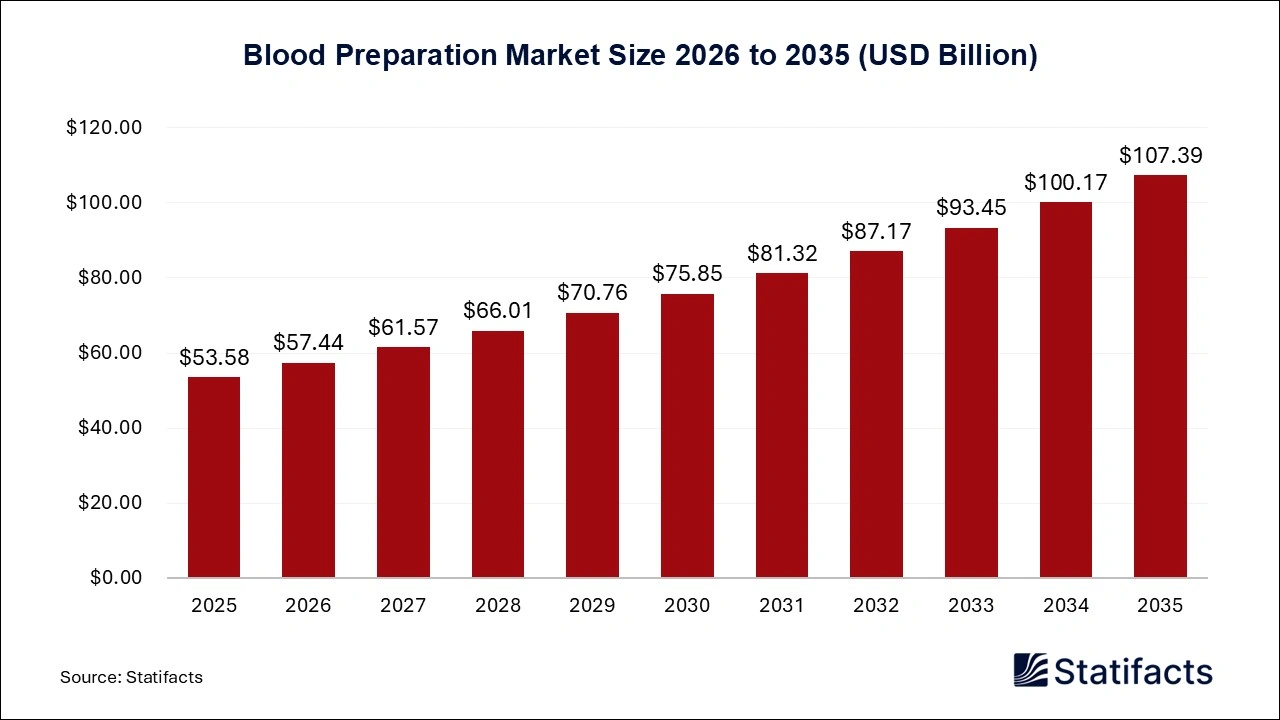
The global blood preparation market, valued at USD 53.58 billion in 2025, is expected to reach USD 107.39 billion by 2035, growing at a robust CAGR of 7.20%. This growth is driven by rising demand for blood products, advancements in medical technology, and increasing prevalence of chronic diseases.
| Reports Attributes | Statistics |
| Market Size in 2025 | USD 53.58 Billion |
| Market Size in 2026 | USD 57.44 Billion |
| Market Size in 2032 | USD 87.17 Billion |
| Market Size by 2035 | USD 107.39 Billion |
| CAGR 2026 to 2035 | 7.20% |
| Base Year | 2025 |
| Forecast Period | 2026 to 2035 |
The growing circumstances and demand for therapies play a profitable role in the market’s growth. Alongside the operational and technical advances, the market has changed the dynamics and narrative of the market, leading to effective and responsible strategies.
Overall, the blood components’ gathering, procedure, and distribution are the layers of the blood preparation business. Further, the pharmaceutical manufacturers and healthcare professionals act as suppliers of the required blood component to hospitals and other suitable medical areas.
The blood preparation is a procedure of segregating the donated blood into multiple parts, like platelets, plasma, and red cells. This whole process is also called component therapy, which helps various needy patients to heal according to their medical needs. The advanced and responsible processing allows safe and effective reach of the blood component to the patients, keeping blood products secure as well. These safe transfusions go through various modifications that complement the development and growth of the market, bringing new life to the patient's health and stimulating healthcare value.
| Regions | Shares (%) |
| North America | 28% |
| Asia Pacific | 27% |
| Europe | 34% |
| LAMEA | 11% |
| Segments | Shares (%) |
| Whole Blood | 23% |
| Blood Components | 48% |
| Blood Derivatives | 29% |
| Segments | Shares (%) |
| Platelet Aggregation Inhibitors | 33% |
| Fibrinolytics | 37% |
| Anticoagulants | 30% |
| Segments | Shares (%) |
| Thrombocytosis | 18% |
| Pulmonary Embolism | 24% |
| Renal Impairment | 22% |
| Angina Blood Vessel Complications | 16% |
| Others | 20% |
Published by Ajit Bansod





