

Share



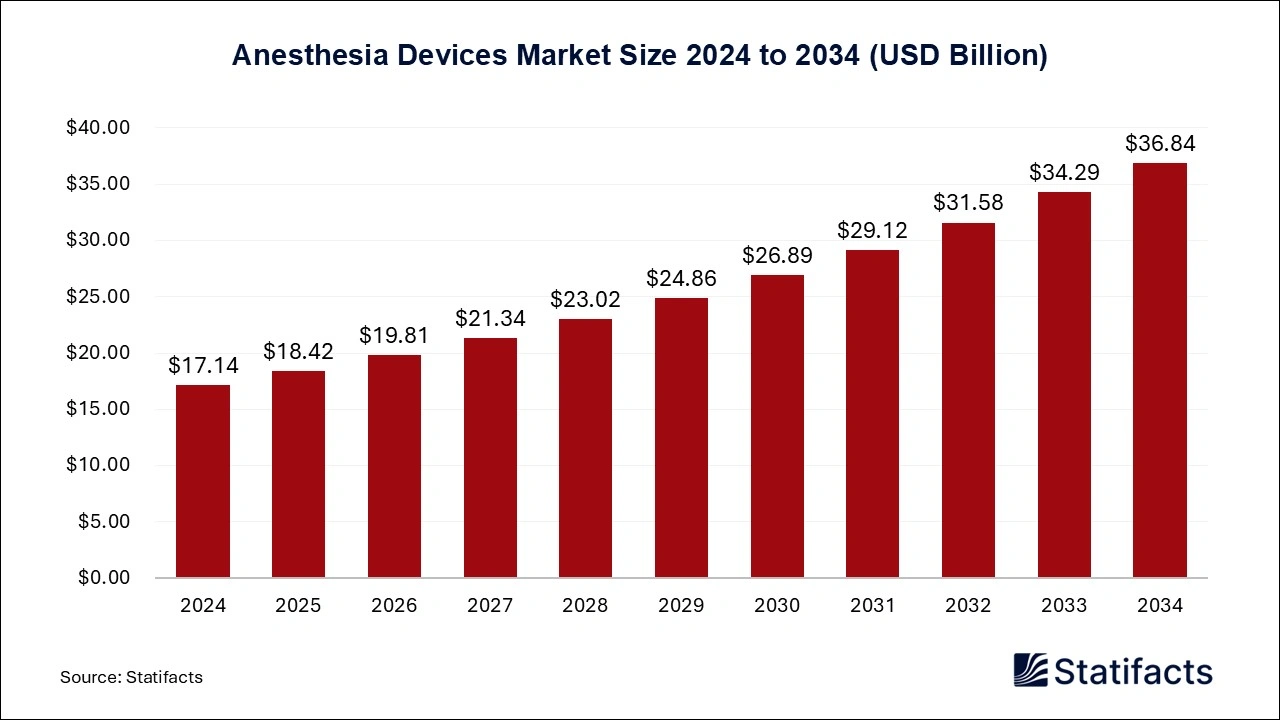
The global anesthesia devices market size was evaluated at USD 17.14 billion in 2024 and is expected to grow around USD 36.84 billion by 2034, registering a CAGR of 8.63% from 2025 to 2034.
| Industry Worth | Details |
| Market Size in 2025 | USD 18.42 Billion |
| Market Size by 2034 | USD 36.84 Billion |
| Market Growth Rate from 2025 to 2034 | CAGR of 7.95% |
Introduction Anesthesia equipment is life-critical healthcare equipment used to deliver anesthetic drugs to patients during surgical and diagnostic procedures in a safe manner. Anesthesia equipment consists of anesthesia machines, ventilators, monitors, and information management systems that keep the patient unconscious and pain-free throughout the procedure. With technological development, there are now smarter AI-based systems for enhanced accuracy, efficiency, and patient safety. Recent anesthesia machines have real-time monitoring and drug delivery features that make them a necessity in operating rooms globally.
The market of anesthesia devices addresses various healthcare fields such as ambulatory surgical centres, hospitals, clinics, and specialty care units. The equipment is mainly deployed across surgical indications like cardiology, orthopaedics, neurology, and general surgery. Demand for the equipment is increasing in the outpatient area with the increase in minimally invasive procedures as well. As medical infrastructure increases across the world, particularly in developing economies, these machines are finding widespread adoption in order to address increasing surgical needs. Further increased regulatory emphasis on patient safety, coupled with the increasing rate of chronic conditions necessitating surgical intervention, has greatly expanded the scope of the market.
The growing rate of surgery, especially cardiovascular surgery, is propelling the demand for anesthesia equipment. Anesthesia is fundamental in providing patient comfort and protection through such invasive medical procedures.
There have been tremendous technological developments that have resulted in the creation of advanced anesthesia delivery systems, monitoring equipment’s and airway management devices.
The anesthesia monitoring devices market is experiencing growth driven by technological advancements, including the integration of AI. Innovations such as real-time gas analysis, depth of anesthesia assessment, and AI-enhanced monitoring are improving patient safety and outcomes. These developments are particularly beneficial in ambulatory surgical centers where efficient and cost-effective monitoring is essential.
The global anesthesia and respiratory devices market is projected to grow significantly, reaching USD 77.9 billion by 2023. This growth is attributed to the increasing prevalence of respiratory diseases and the rising demand for advanced anesthesia devices. The market expansion underscores the importance of continuous innovation and adaption to meet evolving healthcare needs.
North America
In 2024 marked the year when North America happened to be the highest in the anesthesia devices market, when it single-handedly accounted for the highest revenue share. The development of the healthcare infrastructure in this region, the rising elderly population, and the elective and emergency surgeries conducted all contributed to this sudden surge. Other factors include technological advances in anesthesia systems by key players, further prompted by government policies concerning MedTech reimbursements and taxation increases in spending, and the use of robotics and AI, giving the US and Canada the edge for growth stimulation.
Asia Pacific
Asia Pacific is expected to register quick growth over the forecast period. Rapid urbanization, rising disposable incomes, and improved access to medical facilities have increased the number of surgeries performed across the region. Countries such as India, China, and Japan are investing heavily in upgrading hospital infrastructure and expanding healthcare services, which is further contributing to the demand for modern anesthesia delivery systems. The increasing medical tourism industry, especially in India and Thailand, coupled with increasing awareness around safe surgical practices, is propelling the adoption of advanced anesthesia equipment.
China
China has rapidly become a major force in the Asia-Pacific anesthesia devices market thanks to its focused investments in healthcare modernization. A big part of this momentum comes from the government's “Made in China 2025” imitative, which inspires domestic production of medical technologies, including advanced anesthesia systems. Local companies are expanding and collaborating with global med tech giants, bringing in new expertise and invention to the industry. At the same time, a growing number of surgical procedures, strong policy support, and cutting-edge developments in AI-based anesthesia monitoring are helping China solidify its role as a regional leader in this evolving market.
The market for anesthesia devices is moderately concentrated, with a few dominant players driving innovation and distribution worldwide. Although large companies have large market shares, many regional and specialty manufactures provide a competitive landscape. This is influenced by fast-paced technological changes, regulatory requirements, and the increasing demand for sophisticated anesthesia solutions.
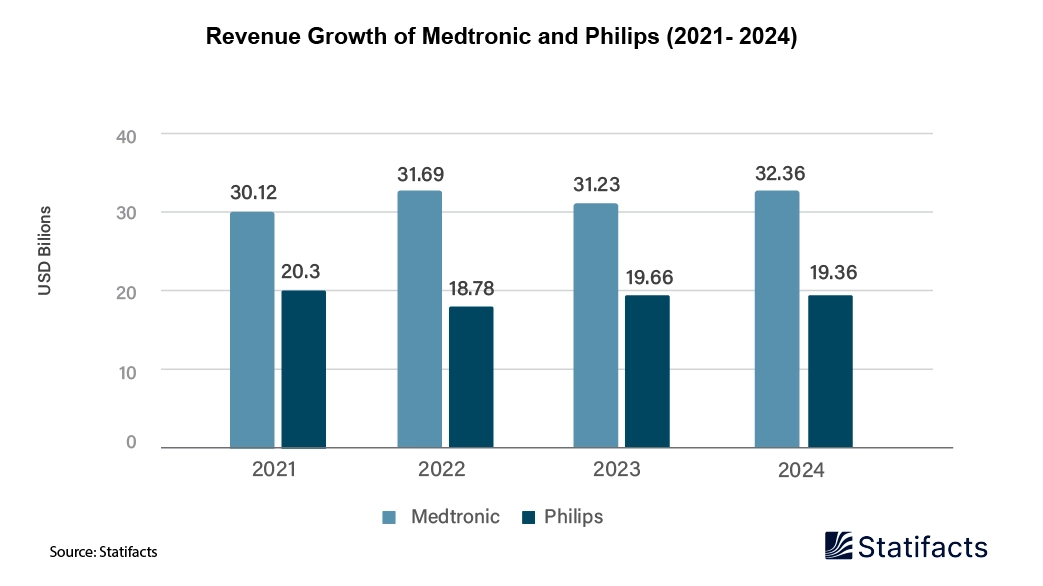
This company operates in over 100 countries offering anesthesia machines, patient monitors, and diagnostic imaging solutions, and IS active in AI and digital health.
This company provides a wide range of medical technologies, including anesthesia delivery and respiratory care systems.
This company specializes in anesthesia workstations and patient monitoring devices. Operates globally with a focus on safety and innovation.
Published by Ajit Bansod





