

Share


U.S. Popping Boba Market (By Flavor: Fruit Flavors, Tea Flavors, Coffee Flavors, Chocolate Flavors, and Others; By Application: Bubble Tea, Frozen Yogurt Toppings, Ice Cream Toppings, Smoothies and Beverages, and Others; By Distribution Channel: Food Service and Retail) Industry Size, Share, Growth, Trends 2026 to 2035

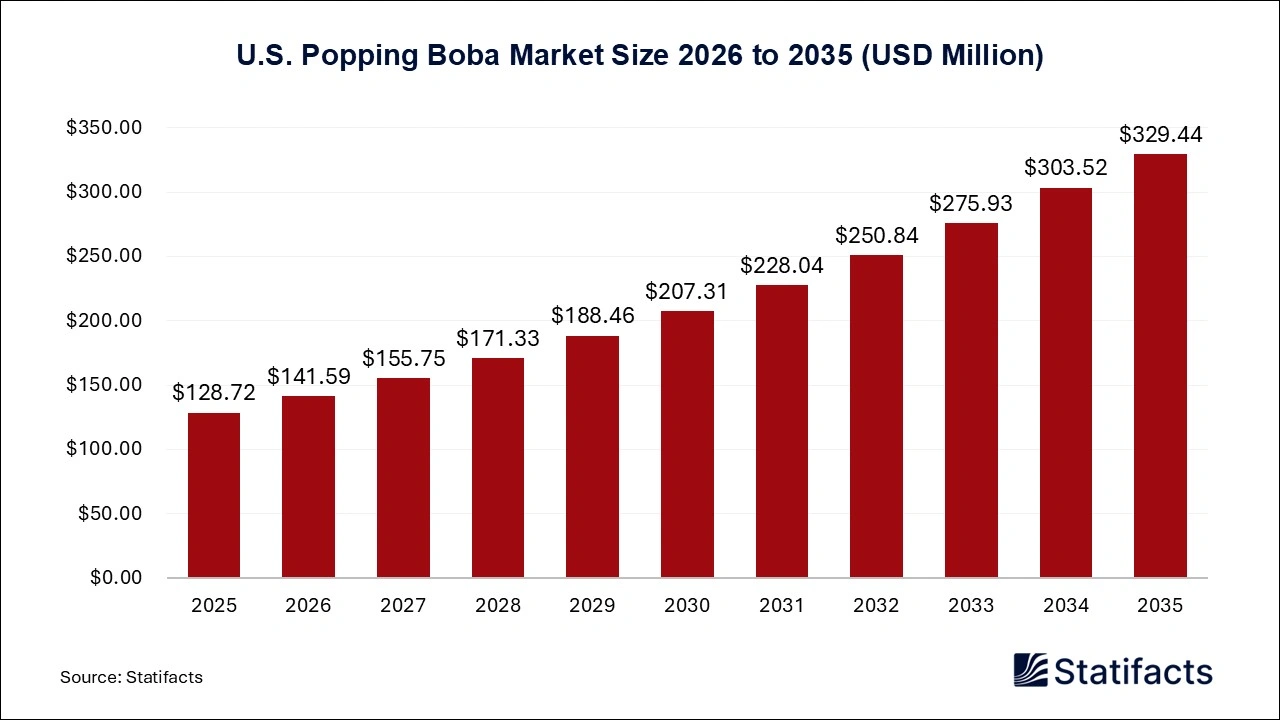
The U.S. popping boba market, valued at USD 128.72 million in 2025, is set for strong expansion, projected to reach USD 329.44 million by 2035. Rising demand for innovative beverage inclusions is driving its steady 9.85% CAGR.
| Reports Attributes | Statistics |
| Market Size in 2025 | USD 128.72 Million |
| Market Size in 2026 | USD 141.59 Million |
| Market Size in 2032 | USD 250.84 Million |
| Market Size by 2035 | USD 329.44 Million |
| CAGR 2026 to 2035 | 9.85% |
| Base Year | 2025 |
| Forecast Period | 2026 to 2035 |
The U.S. popping boba market is expanding rapidly, driven by the growing influence of café culture, with chains like Boba Guys, Tiger Sugar, Sharetea, and others expanding rapidly. Popping boba a gel-like, fruit-filled spheres used in beverages and desserts. The growing influence of social media also plays a major role in the rising popularity of boba beverages among younger generations, who often follow online trends. As a result, the providers are increasing their partnerships with food chains to adopt ready-to-drink beverages and bubble teas at a higher rate. The changing fast-paced lifestyles of Americans also contribute to the rising adoption of on-the-go beverages. The use of popping boba in fruit-based drinks is also increasing its relevance among health-conscious individuals.
The majority of drinks containing boba have higher sugar levels, artificial flavors, and other preservatives, which are not highly preferred by many people. Moreover, some of the new, small-scale stores in the country may face challenges adopting such beverages due to advanced storage requirements, which may also affect their shelf life. The changing relations with China and Taiwan are also expected to affect trade, as imports become more difficult for U.S.-based companies and may increase their overall costs.
The rising government push and consumer preference for clean-label products are considered the future of the U.S. popping boba market, where use will increase in organic and sugar-free drinks. Many companies are targeting the U.S. as a business hub for these beverages, driven by rising demand for healthier alternatives. The trend is strongly supported by the country's growing hospitality industry, where bars and restaurants are expected to incorporate popping boba into beverages such as cocktails, mocktails, fruit margaritas, and frozen drinks. The rise of quick delivery platforms like Uber, GoPuff, Instacart, and DoorDash are also expected to play a crucial role in driving the demand for popping boba.
The integration of artificial intelligence (AI) and machine learning (ML) in the manufacturing of popping boba is significantly helping monitor and detect errors across parameters such as shell thickness, boba size, filling levels, and more. These technologies may analyze consumer preferences using historical data and provide product innovation references for emerging companies. Additionally, use of these systems in marketing will also help in creating a massive userbase in the future.
| Segments | Shares (%) |
| Fruit Flavors | 56% |
| Tea Flavors | 29% |
| Coffee Flavors | 15% |
| Segments | Shares (%) |
| Bubble Tea | 51% |
| Frozen Yogurt Toppings | 14% |
| Ice Cream Toppings | 12% |
| Smoothies and Beverages | 17% |
| Others | 6% |
| Segments | Shares (%) |
| Food Service | 68% |
| Retail | 32% |
Published by Vidyesh Swar





