By clicking “Accept All Cookies” you agree to the storing of cookies on your device to enhance site navigation, analyze site usage, and assist in our marketing efforts.
Privacy PolicyPolypyrrole Bioelectronics Market (By Product: Pure Polypyrrole (PPy), PPy Composites, and PPy Nanostructures; By Application: Electrochemical & Enzymatic Biosensors, Neural Interfaces & Implantable Electrodes, Wearable Bioelectrodes & Epidermal Sensors, Tissue Engineering, and Other Applications; By Region: North America, Europe, Asia Pacific, and LAMEA) Industry Size, Share, Growth, Trends 2025 to 2034
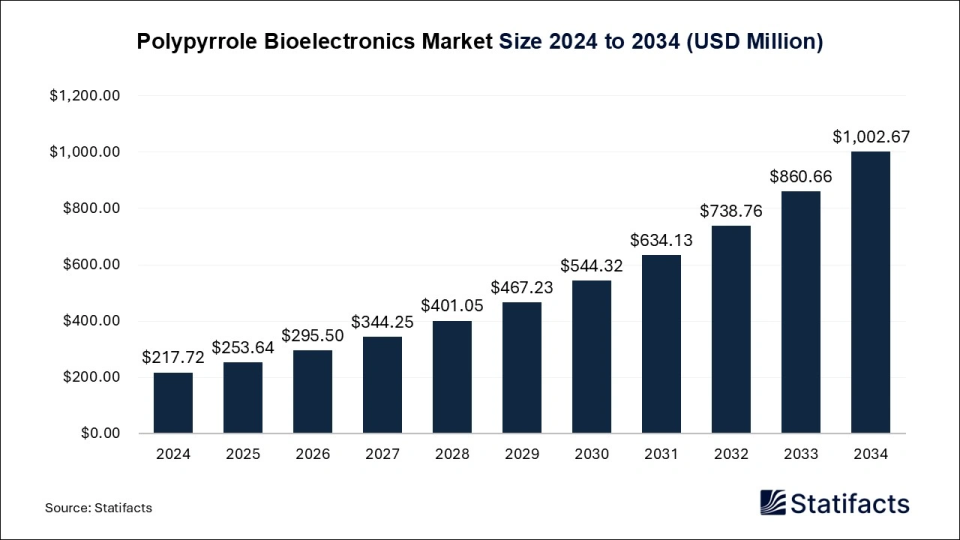
The global polypyrrole bioelectronics market size was valued at USD 217.72 million in 2024, is projected to reach approximately USD 1002.67 million by 2034. This rapid growth, driven by advances in neural interfaces, biosensors, and wearable bioelectronics, is expected at a strong CAGR of 16.5%.
| Reports Attributes | Statistics |
| Market Size in 2024 | USD 217.72 Million |
| Market Size in 2025 | USD 253.64 Million |
| Market Size in 2031 | USD 634.13 Million |
| Market Size by 2034 | USD 1002.67 Million |
| CAGR 2025 to 2034 | 16.5% |
| Base Year | 2024 |
| Forecast Period | 2025 to 2034 |
The polypyrrole bioelectronics market is gaining momentum due to increasing investments in biosensing technologies and the rising use of medical devices. Polypyrrole (PPy), a conductive polymer, is widely used in biomedical applications due to its effective interfacing with biological systems. As demand for soft, biocompatible materials grows, PPy plays a major role in biosensors, smart patches, and other miniaturized electronics that require flexibility and ease of deposition. The growing need for improved chronic disease management and precision medicine is further driving its use in long-term devices, such as cardiac sensors and continuous glucose monitors.
Despite its advantages, polypyrrole faces challenges related to long-term stability. Factors such as oxidative stress, delamination, and environmental degradation can impact performance and restrict use in some biomedical applications. The market also faces regulatory hurdles because stricter testing standards are required to ensure biocompatibility, proper synthesis, and safety. These regulatory constraints may slow the adoption of PPy-based technologies.
The future potential of PPy is strongly supported by advancements in neuroprosthetics, where it can be used as a coating material for electrodes in stimulation and signal-recording devices. The growing demand for wearable sensors for continuous health monitoring is also expected to accelerate adoption, driven by PPy’s flexibility and compatibility with personalized healthcare systems. Additionally, PPy is increasingly used in electroactive constructs that promote cell growth in muscle and cardiac tissue, positioning it as a key material in tissue engineering and regenerative medicine. Rising R&D funding to support the commercialization of PPy-based medical materials is expected to be transformative for the market.
North America holds a leading position due to its strong academic research environment, robust technological infrastructure, and significant investments in neural and biomedical technologies. Countries such as the United States and Canada are driving growth through rapid advancements in personalized healthcare and a growing number of FDA approvals that support bioelectronics innovation.
Artificial intelligence and machine learning are accelerating innovation in the medical technology sector by improving design, optimization, and discovery processes. These technologies help analyze manufacturing parameters to ensure consistent batch quality and minimize waste. Machine learning tools can also detect anomalies and interpret weak bioelectrical signals, enhancing diagnostic precision and supporting more reliable biomedical device performance.
| Regions | Shares (%) |
| North America | 32% |
| Asia Pacific | 28% |
| Europe | 30% |
| LAMEA | 10% |
| Segments | Shares (%) |
| Pure Polypyrrole (PPy) | 40% |
| PPy Composites | 35% |
| PPy Nanostructures | 25% |
| Segments | Shares (%) |
| Electrochemical & Enzymatic Biosensors | 35% |
| Neural interfaces & Implantable Electrodes | 20% |
| Wearable Bioelectrodes & Epidermal Sensors | 18% |
| Tissue Engineering | 15% |
| Other Applications | 12% |
Published by Kesiya Chacko
| Product | 2024 | 2025 | 2026 | 2027 | 2028 | 2029 | 2030 | 2031 | 2032 | 2033 | 2034 |
|---|---|---|---|---|---|---|---|---|---|---|---|
| Pure Polypyrrole (PPy) | 87.09 | 100.44 | 115.83 | 133.57 | 154 | 177.55 | 204.66 | 235.90 | 271.87 | 313.28 | 360.96 |
| PPy Composites | 76.20 | 89.28 | 104.61 | 122.55 | 143.58 | 168.20 | 197.04 | 230.82 | 270.39 | 316.72 | 370.99 |
| PPy Nanostructures | 54.43 | 63.92 | 75.06 | 88.13 | 103.47 | 121.48 | 142.62 | 167.41 | 196.50 | 230.66 | 270.72 |
| Application | 2024 | 2025 | 2026 | 2027 | 2028 | 2029 | 2030 | 2031 | 2032 | 2033 | 2034 |
|---|---|---|---|---|---|---|---|---|---|---|---|
| Electrochemical & Enzymatic Biosensors | 76.20 | 88.27 | 102.24 | 118.42 | 137.16 | 158.86 | 183.98 | 213.07 | 246.75 | 285.74 | 330.88 |
| Neural interfaces & Implantable Electrodes | 43.54 | 51.24 | 60.28 | 70.92 | 83.42 | 98.12 | 115.40 | 135.70 | 159.57 | 187.62 | 220.59 |
| Wearable Bioelectrodes & Epidermal Sensors | 39.19 | 45.91 | 53.78 | 63 | 73.79 | 86.44 | 101.24 | 118.58 | 138.89 | 162.66 | 190.51 |
| Tissue Engineering | 32.66 | 38.30 | 44.92 | 52.67 | 61.76 | 72.42 | 84.91 | 99.56 | 116.72 | 136.84 | 160.43 |
| Other Applications | 26.13 | 29.92 | 34.28 | 39.24 | 44.92 | 51.39 | 58.79 | 67.22 | 76.83 | 87.80 | 100.26 |
| Region | 2024 | 2025 | 2026 | 2027 | 2028 | 2029 | 2030 | 2031 | 2032 | 2033 | 2034 |
|---|---|---|---|---|---|---|---|---|---|---|---|
| North America | 69.67 | 80.66 | 93.38 | 108.10 | 125.13 | 144.84 | 167.65 | 194.04 | 224.58 | 259.92 | 300.80 |
| Europe | 65.32 | 75.59 | 87.47 | 101.21 | 117.11 | 135.50 | 156.76 | 181.36 | 209.81 | 242.71 | 280.75 |
| Asia Pacific | 60.96 | 72.03 | 85.10 | 100.52 | 118.71 | 140.17 | 165.47 | 195.31 | 230.49 | 271.97 | 320.85 |
| LAMEA | 21.77 | 25.36 | 29.55 | 34.42 | 40.10 | 46.72 | 54.44 | 63.42 | 73.88 | 86.06 | 100.27 |
| Subsegment | 2024 | 2025 | 2026 | 2027 | 2028 | 2029 | 2030 | 2031 | 2032 | 2033 | 2034 |
|---|---|---|---|---|---|---|---|---|---|---|---|
| Pure Polypyrrole (PPy) | 87.09 | 100.44 | 115.83 | 133.57 | 154 | 177.55 | 204.66 | 235.90 | 271.87 | 313.28 | 360.96 |
| PPy Composites | 76.20 | 89.28 | 104.61 | 122.55 | 143.58 | 168.20 | 197.04 | 230.82 | 270.39 | 316.72 | 370.99 |
| PPy Nanostructures | 54.43 | 63.92 | 75.06 | 88.13 | 103.47 | 121.48 | 142.62 | 167.41 | 196.50 | 230.66 | 270.72 |
| Subsegment | 2024 | 2025 | 2026 | 2027 | 2028 | 2029 | 2030 | 2031 | 2032 | 2033 | 2034 |
|---|---|---|---|---|---|---|---|---|---|---|---|
| Electrochemical & Enzymatic Biosensors | 76.20 | 88.27 | 102.24 | 118.42 | 137.16 | 158.86 | 183.98 | 213.07 | 246.75 | 285.74 | 330.88 |
| Neural interfaces & Implantable Electrodes | 43.54 | 51.24 | 60.28 | 70.92 | 83.42 | 98.12 | 115.40 | 135.70 | 159.57 | 187.62 | 220.59 |
| Wearable Bioelectrodes & Epidermal Sensors | 39.19 | 45.91 | 53.78 | 63 | 73.79 | 86.44 | 101.24 | 118.58 | 138.89 | 162.66 | 190.51 |
| Tissue Engineering | 32.66 | 38.30 | 44.92 | 52.67 | 61.76 | 72.42 | 84.91 | 99.56 | 116.72 | 136.84 | 160.43 |
| Other Applications | 26.13 | 29.92 | 34.28 | 39.24 | 44.92 | 51.39 | 58.79 | 67.22 | 76.83 | 87.80 | 100.26 |
| Subsegment | 2024 | 2025 | 2026 | 2027 | 2028 | 2029 | 2030 | 2031 | 2032 | 2033 | 2034 |
|---|---|---|---|---|---|---|---|---|---|---|---|
| North America | 69.67 | 80.66 | 93.38 | 108.10 | 125.13 | 144.84 | 167.65 | 194.04 | 224.58 | 259.92 | 300.80 |
| Europe | 65.32 | 75.59 | 87.47 | 101.21 | 117.11 | 135.50 | 156.76 | 181.36 | 209.81 | 242.71 | 280.75 |
| Asia Pacific | 60.96 | 72.03 | 85.10 | 100.52 | 118.71 | 140.17 | 165.47 | 195.31 | 230.49 | 271.97 | 320.85 |
| LAMEA | 21.77 | 25.36 | 29.55 | 34.42 | 40.10 | 46.72 | 54.44 | 63.42 | 73.88 | 86.06 | 100.27 |
To get full access to our Market Insights, you need a Professional Account or a Business Suite.
You will receive an email from our Business Development Manager. Please be sure to check your SPAM/JUNK folder too.
Our customers work more efficiently and benefit from