



Palm Oil Market (By Nature: Organic, Conventional; By Product: Crude Palm Oil, Palm Kernel Oil, RBD Palm Oil, Fractionated Palm Oil; By Application: Food & Beverage, Personal Care & Cosmetics, Biofuel & Energy, Pharmaceuticals, Others; By Region: North America, Europe, Asia-Pacific, LAMEA) Industry Size, Share, Growth, Trends 2026 to 2035.

The global palm oil market was valued at USD 75.52 billion in 2025 and is projected to reach USD 116.16 billion by 2035, expanding at a CAGR of 4.40%. Growth is driven by rising demand across food, cosmetics, and biofuel industries.
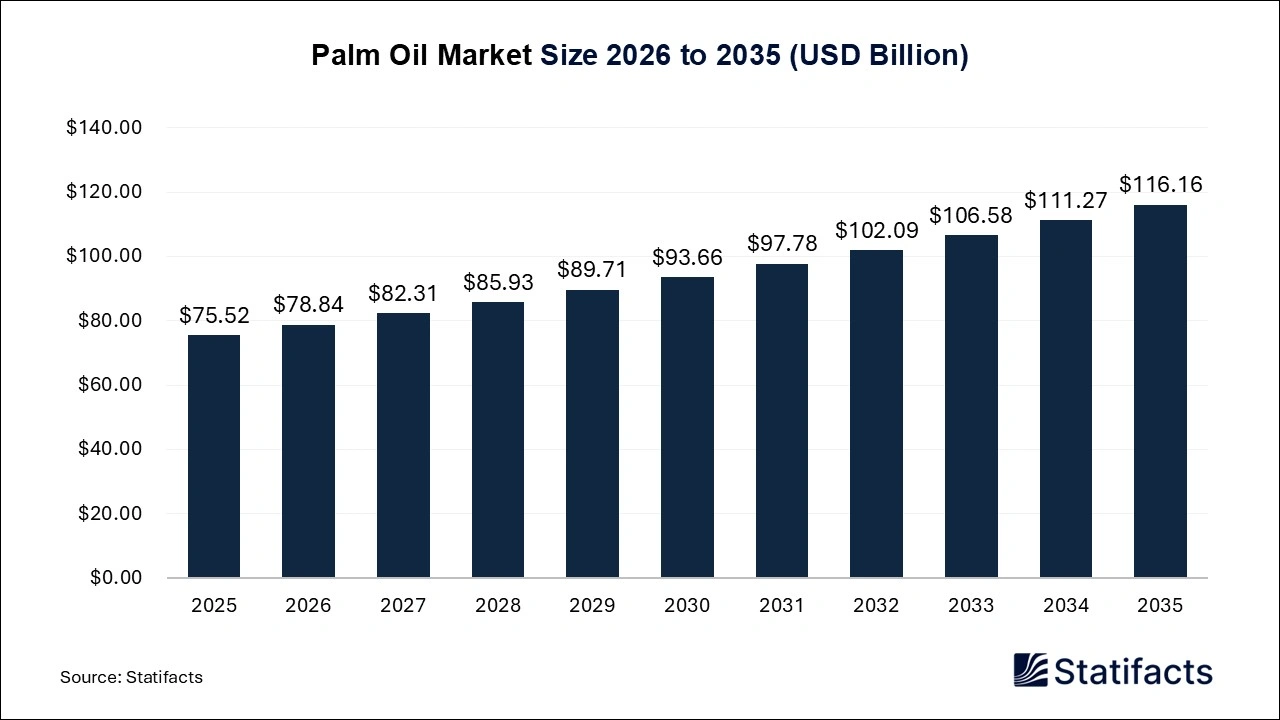
| Reports Attributes | Statistics |
| Market Size in 2025 | USD 75.52 Billion |
| Market Size in 2026 | USD 78.84 Billion |
| Market Size in 2032 | USD 102.09 Billion |
| Market Size by 2035 | USD 116.16 Billion |
| CAGR 2026 to 2035 | 4.40% |
| Base Year | 2025 |
| Forecast Period | 2026 to 2035 |
Palm oil is made of the fruit grown on the oil palm tree, with its main homeland in the Southwest and West Africa. It’s an edible vegetable oil apt for consumption. It's commonly found at supermarket racks as packaged products. The stabilization to meet the highest smoky point makes it a perfect choice for high-heat frying. Its use and consistent demand in the industrial, personal care, and food sectors bring immense profit and expansion to the market.
The investment counts as a smart pathway because of the large equipment manufacturing volume. Purchasing and storing palm oil during its highest production time marks a bulky return on the sale. The eco-friendly, natural plant-related ingredients are receiving hype in the cosmetics manufacturing line, which directly prefers the use of palm oil. While the sustainability factor and strict regulatory mandates are taking a close view and considering the natural alternatives for a clean ecosystem.
The market is like a ‘gold’ investment for most of the smart giants seeking thoughtful deals to grow engagements with consumers. New brands and their production techniques, along with their commercialisation skills, are pushing existing manufacturers to up their tech-based game in the palm oil industry. The ‘best of waste’ fits well with the advanced facilities involving the monetisation of waste content spotted in the palm oil process or converting palm oil mill effluent to bio-fertilisers or biogas, which unlocks a new source of revenue for the palm oil market.
| Regions | Shares (%) |
| North America | 9.21% |
| Europe | 17.35% |
| Asia Pacific | 52.37% |
| LAMEA | 21.07% |
| Segments | Shares (%) |
| Organic | 11.80% |
| Conventional | 88.20% |
| Segments | Shares (%) |
| Crude Palm Oil | 34.10% |
| Palm Kernel Oil | 20.07% |
| RBD Palm Oil | 25.36% |
| Fractionated Palm Oil | 20..47% |
| Segments | Shares (%) |
| Food & Beverage | 54.12% |
| Personal Care & Cosmetics | 14.70% |
| Biofuel & Energy | 12.61% |
| Pharmaceuticals | 8.00% |
| Others | 10.57% |





