

Share


U.S. Health and Wellness Market (By Type: Products, Services; By Product: Weight Loss Products, Healthy Diet, Sports Nutrition, Vitamin and Dietary Supplements; By Service: Nutrition Services, Healthy Food Delivery, Sleep and Mental Wellness, Fitness, Centres, Equipment and Programs) Industry Size, Share, Growth, Trends 2026 to 2035

The North America health and wellness market exceeded USD 167.98 billion in 2025 and is expected to grow to nearly USD 331.08 billion by 2035, advancing at a 10.14% CAGR, driven by rising demand for preventive healthcare, fitness solutions, and nutrition-focused lifestyles.
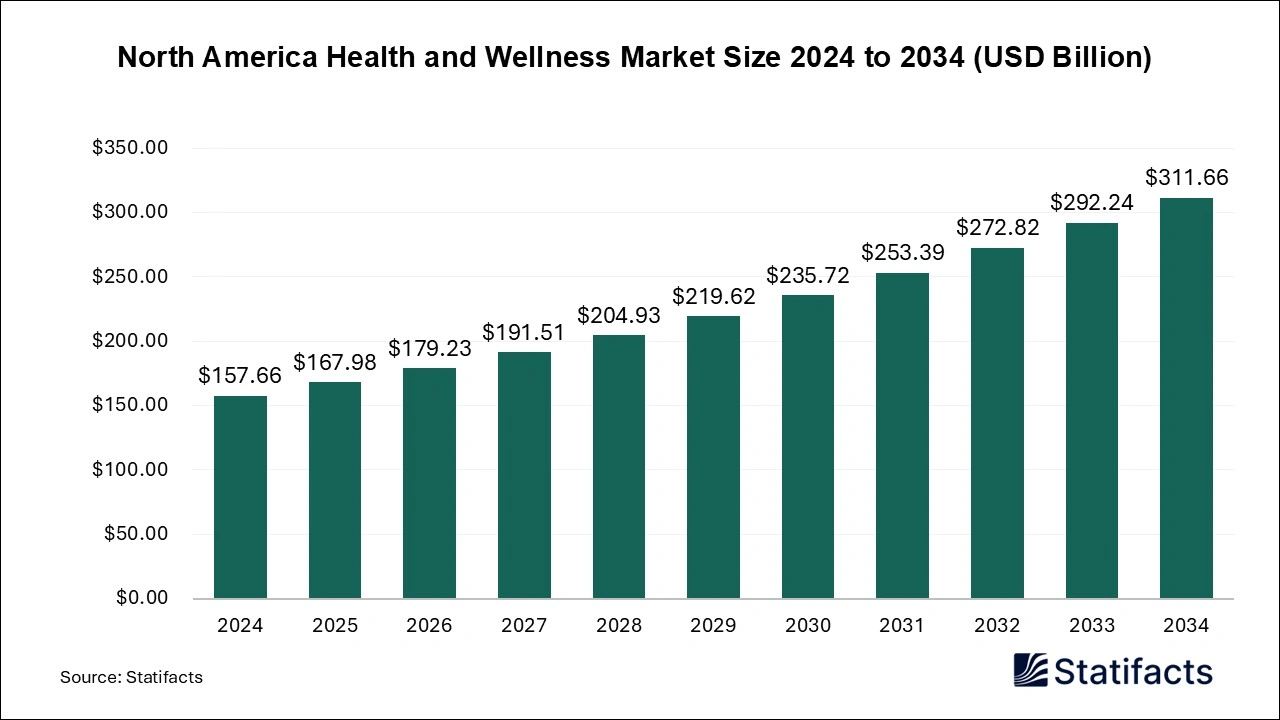
| Reports Attributes | Statistics |
| Market Size in 2025 | USD 167.98 Billion |
| Market Size in 2026 | USD 179.23 Billion |
| Market Size in 2032 | USD 272.82 Billion |
| Market Size by 2035 | USD 331.08 Billion |
| CAGR 2026 to 2035 | 7.05% |
| Base Year | 2025 |
| Forecast Period | 2026 to 2035 |
Demand is rising due to the prevalence of chronic diseases and the shift toward preventive health behaviors. According to the U.S. Centers for Disease Control and Prevention’s 2023 chronic disease report, conditions such as cardiovascular disease, obesity, and diabetes remain leading health challenges in the United States, contributing to increased interest in fitness programs, nutritional supplements, and evidence based lifestyle interventions. Similarly, the Public Health Agency of Canada’s 2023 national health indicators highlight rising rates of hypertension and metabolic disorders, prompting more consumers to adopt diet improvement plans, physical activity regimes, and self monitoring tools.
Mental health awareness is also driving strong demand in the region. The National Institute of Mental Health’s 2023 analysis reports continued increases in anxiety and stress related symptoms among U.S. adults, which has fueled the uptake of meditation apps, digital therapy platforms, and workplace wellbeing programs. Canada has seen similar trends. According to Health Canada’s 2023 mental health survey, demand for mindfulness programs, counseling services, and digital wellbeing resources has increased steadily. Wearable technologies that track sleep, stress, and activity levels further support the data driven approach many consumers now take toward mental and physical wellness.
While demand is strong, access and affordability remain notable challenges. According to the U.S. Census Bureau’s 2023 insurance coverage findings, preventive services and wellness investments are not equally accessible across income groups, especially in regions with limited healthcare infrastructure. Fitness memberships, nutrition coaching, and specialized wellness services can carry substantial costs, which reduce adoption among lower-income populations. In Canada, Statistics Canada’s 2023 household expenditure review shows that spending on wellness products varies significantly by socioeconomic status, with rural and remote communities facing limited access to wellness facilities.
Regulatory inconsistencies also affect growth. Dietary supplements, personal health devices, and digital wellness tools operate under varying regulatory frameworks in the United States and Canada. The U.S. Food and Drug Administration’s 2023 safety advisory on supplement quality emphasized ongoing concerns regarding product verification, contamination risks, and labeling accuracy, which influences consumer trust. Health Canada’s 2022 natural health products assessment raised similar concerns about standardization. Workforce shortages in nutrition counseling and behavioral health services also create bottlenecks, although AI supported coaching systems and digital triage tools are beginning to ease some of these constraints.
North America features a diverse, innovation-driven wellness landscape. Urban centers in the United States lead in the adoption of fitness technologies, digital coaching platforms, and integrative health services. According to the CDC’s 2023 Behavioral Risk Factor Surveillance System, urban regions report higher levels of physical activity and preventive health engagement than rural areas. Canada mirrors this trend, with major cities such as Toronto, Vancouver, and Montreal showing higher participation in wellness programs and plant based nutrition initiatives. However, remote and northern communities continue to experience access challenges due to limited infrastructure.
Public health programs play a strong role in shaping the regional market. The U.S. Department of Agriculture’s 2023 nutrition security update highlights federal investments in improving dietary patterns through expanded fruit and vegetable access programs. In Canada, the Public Health Agency of Canada’s 2023 healthy living strategy encourages physical activity, improved dietary choices, and early screening for preventable diseases. Digital health integration is accelerating in both countries. AI enabled wellness platforms, remote nutrition counseling systems, and wearable biometric monitors are now widely incorporated into employer wellness programs and personal health routines, contributing to broader market penetration.
The United States remains the largest contributor to the North American wellness ecosystem due to its strong private-sector innovation and growing emphasis on lifestyle-based healthcare. According to the CDC’s 2023 national health statistics, chronic disease prevalence continues to drive interest in nutrition programs, physical activity solutions, and stress management services. The nation leads in the adoption of wearable technologies, AI powered wellness coaching, and personalized analytics platforms that support self guided health improvement. Employers increasingly offer wellness benefits, including mental health support, fitness subsidies, and preventive screenings. However, socioeconomic disparities remain significant, influencing access to high quality wellness services across different regions.
Strong public health frameworks and growing consumer interest in preventive care reinforce Canada’s health and wellness market. According to Health Canada’s 2023 healthy living report, participation in physical activity and nutrition programs continues to increase, driven by national campaigns promoting active lifestyles and balanced diets. The country maintains a robust ecosystem of community wellness programs, registered dietitians, and preventive health services. Digital wellness adoption is rising, with more Canadians using mobile health apps, remote counseling services, and wearable devices to support personal health goals. Access remains more limited in remote regions, but ongoing federal and provincial initiatives aim to reduce these gaps through expanded digital health infrastructure.
| Segments | Shares (%) |
| Products | 58% |
| Services | 42% |
| Segments | Shares (%) |
| Weight Loss Products | 22% |
| Healthy Diet | 26% |
| Sports Nutrition | 24% |
| Vitamin and Dietary Supplements | 22% |
| Segments | Shares (%) |
| Nutrition Services | 34% |
| Healthy Food Delivery | 24% |
| Sleep and Mental Wellness | 22% |
| Fitness, Centres, Equipment and Programs | 20% |





