

Share


Mobile Cardiac Telemetry Monitors Market (By Type: Lead Based Devices and Patch Based Devices; By Application: Hospitals, Household, and Ambulatory Surgical Centres; By Region: North America, Europe, Asia Pacific, and LAMEA) Industry Size, Share, Growth, Trends 2026 to 2035

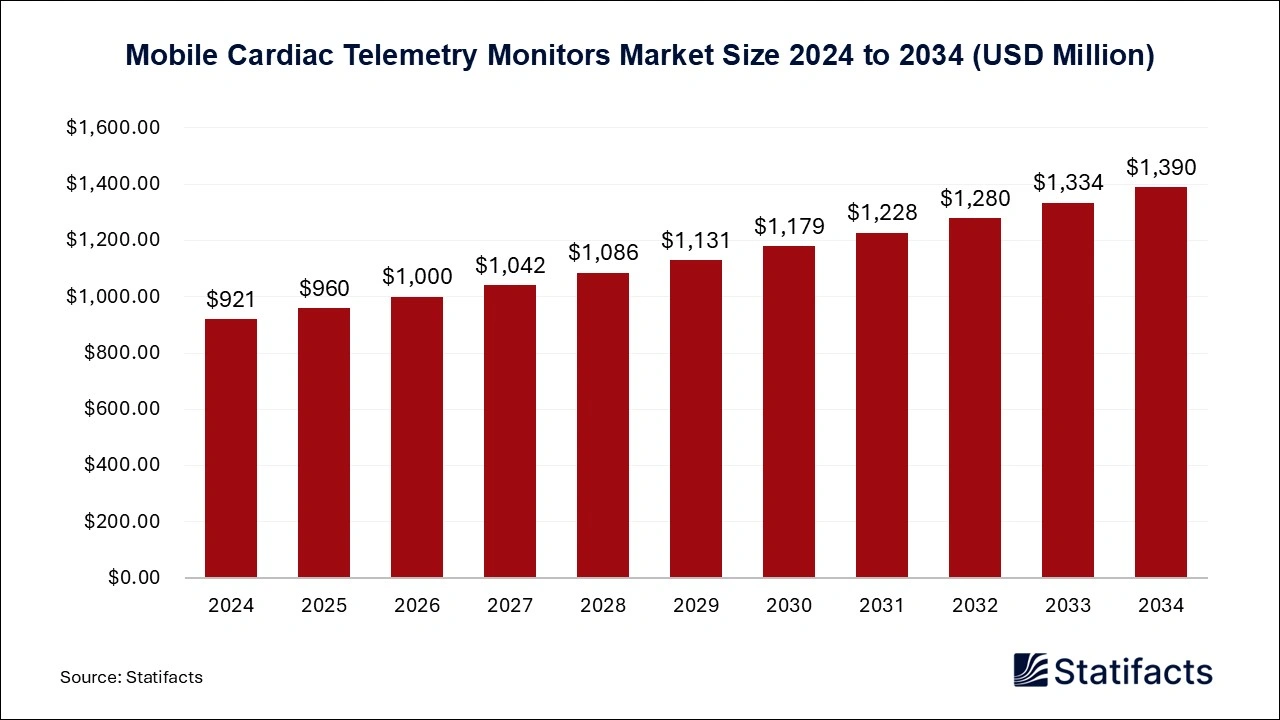
The global mobile cardiac telemetry monitors market, valued at USD 960 million in 2025, is projected to reach approximately USD 1,445 million by 2035. This growth, driven by rising cardiovascular disease prevalence and adoption of remote monitoring technologies, is expected at a CAGR of 4.17%.
| Reports Attributes | Statistics |
| Market Size in 2025 | USD 960 Million |
| Market Size in 2026 | USD 1,000 Million |
| Market Size in 2032 | USD 1,280 Million |
| Market Size by 2035 | USD 1,445 Million |
| CAGR 2026 to 2035 | 4.17% |
| Base Year | 2025 |
| Forecast Period | 2026 to 2035 |
The mobile cardiac telemetry market is growing at a strong pace as awareness about telehealth solutions continues to rise around the world. These technologies offer patients a convenient way to monitor heart health without the need for frequent hospital visits, which is especially important for people managing chronic heart conditions. Mobile cardiac telemetry (MCT) systems allow continuous monitoring of a patient’s cardiac activity through wearable devices that transmit data to healthcare providers in real time. This enables early detection of irregular heart rhythms and other cardiac abnormalities, making the technology an increasingly vital part of preventive healthcare.
Urban populations are driving much of this growth. With busy lifestyles, growing stress levels, and sedentary habits, heart-related issues are becoming more common in cities. Patients are increasingly aware of the benefits of remote healthcare systems that allow them to stay connected to medical professionals while maintaining their daily routines. The convenience and accuracy of mobile cardiac telemetry make it an ideal choice for those seeking effective, non-invasive cardiac care.
However, the adoption of these devices in semi-urban and rural areas remains slower due to several challenges. Technological barriers such as weak internet connectivity, lack of digital literacy, and the relatively high cost of devices are key hurdles in expanding access. Despite these challenges, governments and healthcare organizations are investing heavily in telemedicine and digital healthcare infrastructure. Initiatives to expand broadband access and promote digital health adoption are helping bridge the gap, creating opportunities for MCT providers to enter underserved regions. The growing focus on remote patient monitoring is also encouraging hospitals and clinics to adopt cloud-based systems for seamless data storage, sharing, and analysis.
The integration of artificial intelligence is transforming the mobile cardiac telemetry market further. AI algorithms can analyze large amounts of heart rhythm data collected from telemetry devices, detect irregularities, and identify potential cardiac conditions much faster than traditional methods. These systems can also trigger automatic alerts for healthcare professionals and patients, helping prevent major health events such as strokes or cardiac arrests. In addition, AI improves data accuracy and reduces false alarms by learning patient-specific patterns over time.
As the healthcare industry continues to move toward automation, mobile cardiac telemetry systems are helping reduce the manual workload for doctors and technicians. Real-time analysis and automated reporting allow clinicians to focus on decision-making rather than routine data collection. This efficiency is improving the quality of cardiac care and making it more accessible to a larger population.
The future of the mobile cardiac telemetry market looks promising, with continued innovation in wearable sensors, wireless connectivity, and cloud-based health data systems. As healthcare becomes more patient-centric and digitally driven, MCT solutions will play a key role in early diagnosis, continuous care, and better management of heart disease. With support from AI, improved affordability, and wider telehealth integration, mobile cardiac telemetry is set to become a cornerstone of modern cardiac monitoring across the globe.
| Regions | Shares (%) |
| North America | 21.04% |
| Asia Pacific | 24.01% |
| Europe | 32.14% |
| LAMEA | 22.81% |
| Segments | Shares (%) |
| Lead Based Devices | 33.69% |
| Patch Based Devices | 66.31% |
| Segments | Shares (%) |
| Hospitals | 13.66% |
| Household | 42.53% |
| Ambulatory Surgical Centres | 43.81% |
Published by Ajit Bansod





