

Share


Middle East & Africa Popping Boba Market (By Flavor: Fruit Flavors, Tea Flavors, Coffee Flavors, Chocolate Flavors, and Others; By Application: Bubble Tea, Frozen Yogurt Toppings, Ice Cream Toppings, Smoothies and Beverages, and Others; By Distribution Channel: Food Service, Retail, Supermarkets & Hypermarkets, Convenience Stores, Online, and Others) Industry Size, Share, Growth, Trends 2026 to 2035

The Middle East & Africa popping boba market size was valued at USD 15.8 billion in 2025, is projected to surge to USD 44.54 billion by 2035, driven by rising café culture, diverse flavor innovation, and strong 10.92% annual growth.
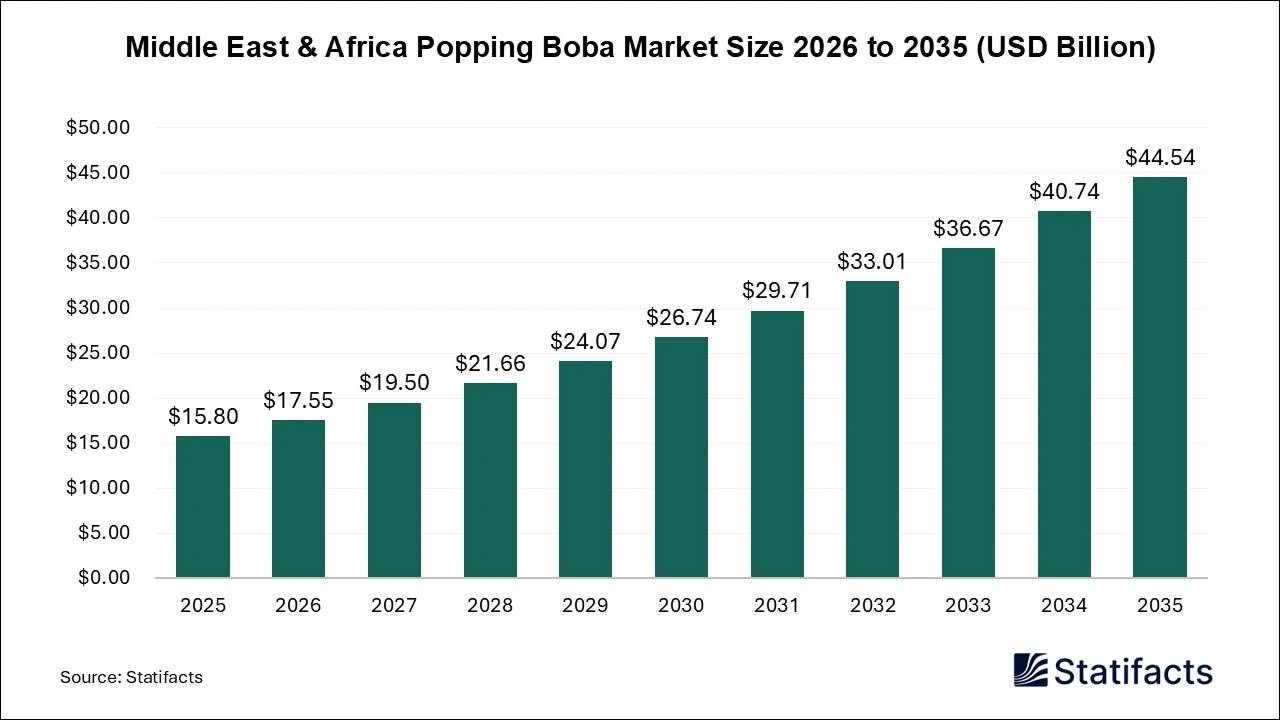
| Reports Attributes | Statistics |
| Market Size in 2025 | USD 15.8 Billion |
| Market Size in 2026 | USD 17.55 Billion |
| Market Size in 2032 | USD 33.01 Billion |
| Market Size by 2035 | USD 44.54 Billion |
| CAGR 2026 to 2035 | 10.92% |
| Base Year | 2025 |
| Forecast Period | 2026 to 2035 |
The MEA region is highly focused on improving its manufacturing base, where the UAE, South Africa, and many other countries will increase the production of such beverages. The companies in the region are focused on introducing products that align with local cultural norms and other parameters essential to running a business in these areas. Additionally, the tourism demand is also expected to attract several foodservice partnerships with hotels, mall food courts, and other public places to help the Middle East and Africa pooping boba market grow. The increasing e-commerce presence in such areas is also expected to be a game-changer in the future. The region's rapid development is also expected to attract several investment opportunities for large-scale events.
The Middle East and Africa region has been a major hub for adopting technologies like artificial intelligence AI and machine learning ML, which are being implemented to detect inconsistencies in thickness and shell thickness. Additionally, AI will be optimized to manage the cold chain in such temperature-challenging areas. The use of these technologies is also expected to help implement personalized marketing for these product lines.
Dubai is one of the highest-rated Middle Eastern countries in terms of tourism and retail, which has helped manage business in the country so far. The higher infrastructure development rate has also been a major factor for countries seeking to establish new beverage businesses. The rising collaboration rate with the leading hotels and resorts is expected to drive huge growth for popping boba in the future. Products from several companies, with different flavors and varieties such as yoghurts, are available in the vending machines of Dubai, which reflects a higher level of development.
Saudi Arabia is one of the opportunistic countries in the Middle East and Africa popping boba market, where factors like rising youth numbers, expansion of malls, and many other factors are contributing towards the growth. Growing developments are also driving a strong demand among retail chains for introducing ready-to-drink, clean-label beverages that are accessible.
| Segments | Shares (%) |
| Fruit Flavors | 34% |
| Tea Flavors | 24% |
| Coffee Flavors | 16% |
| Chocolate Flavors | 14% |
| Others | 12% |
| Segments | Shares (%) |
| Bubble Tea | 42% |
| Frozen Yogurt Toppings | 18% |
| Ice Cream Toppings | 15% |
| Smoothies and Beverages | 17% |
| Others | 8% |
| Segments | Shares (%) |
| Food Service | 30% |
| Retail | 22% |
| Supermarkets & Hypermarkets | 18% |
| Convenience Stores | 10% |
| Online | 14% |
| Others | 6% |
Published by Vidyesh Swar





