

Share


Levomilnacipran Market (By Type: 20mg, 40mg, 80mg, and 120mg; By Application: Online Sales and Offline Sales; By Region: North America, Europe, Asia Pacific, Latin America, and Middle East & Africa) Industry Size, Share, Growth, Trends 2026 to 2035.

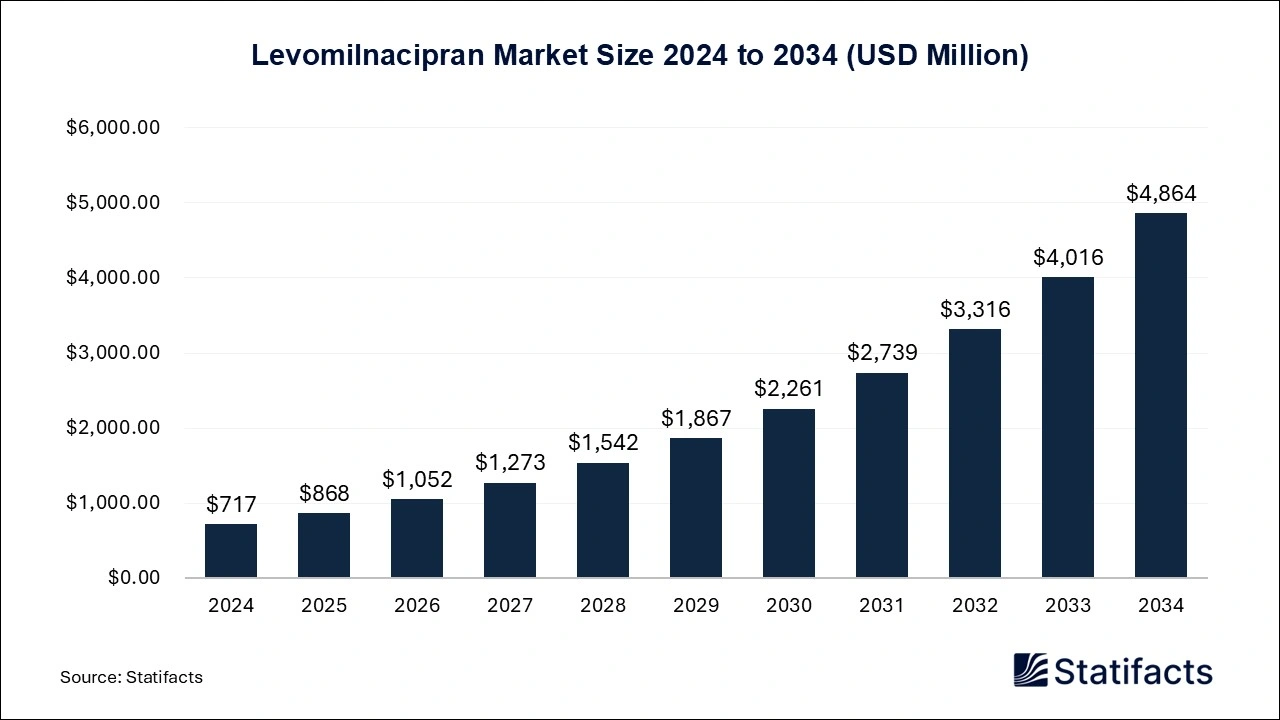
The global levomilnacipran market, valued at USD 868 million in 2025, is projected to reach approximately USD 5,613 million by 2035. This remarkable growth, driven by rising prevalence of depression and advancements in antidepressant therapies, is expected at a CAGR of 20.52%.
| Reports Attributes | Statistics |
| Market Size in 2025 | USD 868 Million |
| Market Size in 2026 | USD 1,052 Million |
| Market Size in 2032 | USD 3,316 Million |
| Market Size by 2035 | USD 5,613 Million |
| CAGR 2026 to 2035 | 20.52% |
| Base Year | 2025 |
| Forecast Period | 2026 to 2035 |
The levomilnacipran market is expanding due to the growing incidence of major depressive disorder (MDD), stress-related mental health conditions, and the global rise in awareness about mental well-being. Levomilnacipran, a serotonin-norepinephrine reuptake inhibitor (SNRI), is known for its dual-action mechanism that enhances mood regulation and cognitive balance. Its strong efficacy in improving energy, motivation, and cognitive function compared to traditional antidepressants has positioned it as a preferred treatment option in certain patient populations. The expansion of mental health treatment programs and the reduction of stigma associated with antidepressant use have also supported market growth.
However, side effects such as insomnia, elevated blood pressure, and potential drug interactions act as restraints to widespread adoption. Patent expirations and the presence of alternative antidepressants, including SSRIs and other SNRIs like duloxetine and venlafaxine, also intensify market competition. Moreover, the high cost of branded medications in developing economies limits patient accessibility.
The levomilnacipran market is expected to grow more rapidly with the integration of artificial intelligence AI-based technologies in mental health diagnostics, personalized medicine, and pharmacovigilance. Artificial intelligence tools are increasingly being used to identify biomarkers for depression, predict treatment responses, and assist clinicians in selecting optimal antidepressant regimens based on patient history and genetic data.
| Regions | Shares (%) |
| North America | 29.28% |
| Asia Pacific | 20.83% |
| Europe | 18.44% |
| LAMEA | 31.45% |
| Segments | Shares (%) |
| 20mg | 18.53% |
| 40mg | 49.66% |
| 80mg | 7.17% |
| 120mg | 24.64% |
| Segments | Shares (%) |
| Online Sales | 57.81% |
| Offline Sales | 42.19% |





