

By clicking “Accept All Cookies” you agree to the storing of cookies on your device to enhance site navigation, analyze site usage, and assist in our marketing efforts.
Privacy PolicyLatin America Corporate Wellness Market (By Service: Fitness, Health Risk Assessment, Health Screening, Smoking Cessation, Stress Management, Nutrition & Weight Management, Others; By Category: Psychological Therapists, Fitness & Nutrition Consultants, Organizations/Employers; By Delivery Model: Offsite, Onsite; By End-use: Large Scale Organizations, Medium Scale Organizations, Small Scale Organizations) Industry Size, Share, Growth, Trends 2025 to 2034
The Latin America corporate wellness market was valued at USD 3.94 billion in 2024 and is projected to reach about USD 8.23 billion by 2034, growing at a 7.64% CAGR as organizations prioritize employee health, productivity, and preventive care programs.
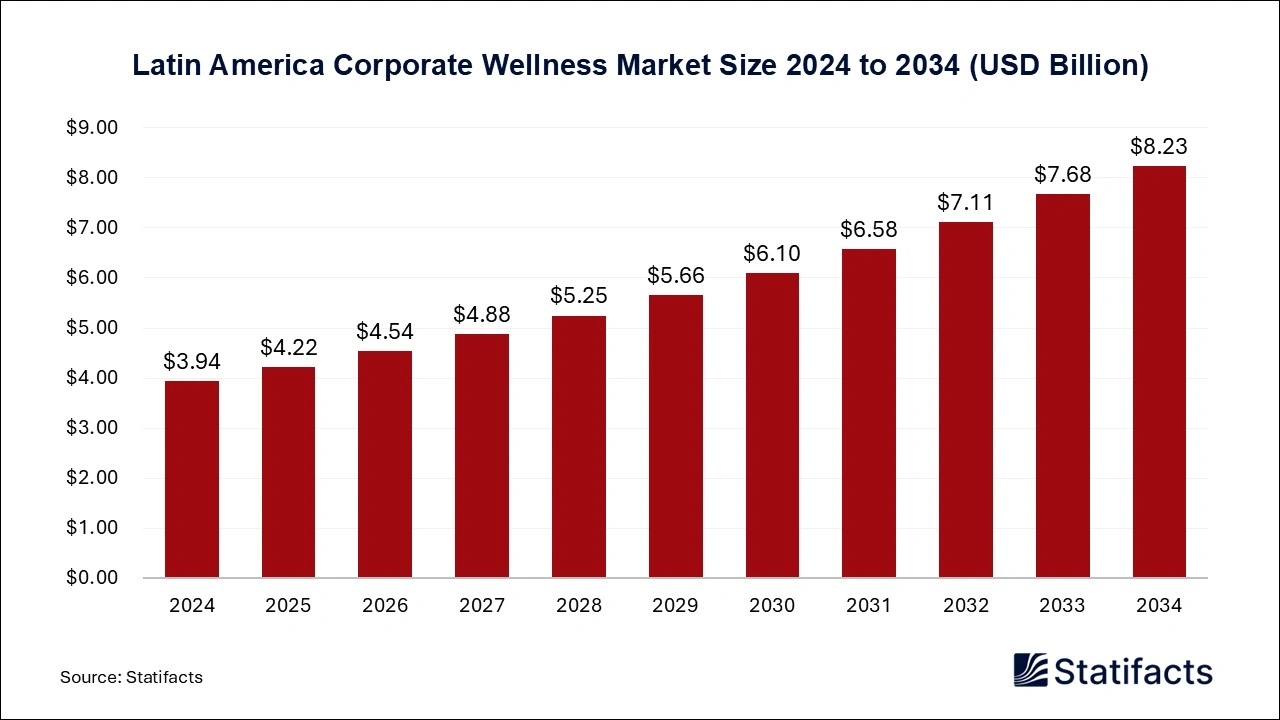
| Reports Attributes | Statistics |
| Market Size in 2024 | USD 3.94 Billion |
| Market Size in 2025 | USD 4.22 Billion |
| Market Size in 2031 | USD 6.58 Billion |
| Market Size by 2034 | USD 8.23 Billion |
| CAGR 2025 to 2034 | 7.64% |
| Base Year | 2024 |
| Forecast Period | 2025 to 2034 |
Demand is increasing because employers across Latin America are facing rising health-related productivity losses linked to chronic diseases, stress and musculoskeletal disorders. PAHO reported that cardiovascular disease, diabetes and obesity are growing public health concerns in countries such as Brazil, Argentina, Chile and Mexico, prompting companies to implement health-risk assessments, nutrition programmes and physical activity initiatives. Workplace mental health support is also gaining importance as employees report increasing levels of stress and burnout, particularly in major metropolitan areas.
Urbanisation and the growth of multinational corporations have also contributed to higher programme adoption. Large employers in finance, technology and manufacturing now integrate mental health counselling, telehealth access, yoga and mindfulness sessions, and digital coaching platforms. Many employers are shifting towards hybrid models that offer both onsite services and virtual wellness support, making programmes more accessible for remote workers and distributed teams. The region’s growing digital health ecosystem, especially in Brazil and Mexico, is accelerating adoption of app-based wellness tools and wearable integrations.
Despite positive trends, the market faces barriers that influence its growth rate. Budget limitations remain a major constraint, especially for small and medium enterprises. Many organisations struggle to justify spending on wellness programmes when short-term financial pressures dominate decision making. The World Bank noted in 2022 that disparities in digital access and healthcare resources across the region limit the scalability of corporate wellness solutions, particularly in rural areas.
Another obstacle is cultural stigma surrounding mental health. Awareness is improving, but employees in some countries may still hesitate to participate in counselling or behavioural wellness programmes due to concerns about confidentiality or job security. In addition, workforce informality in some sectors reduces employer engagement in structured wellness efforts. Data privacy and regulatory inconsistencies across countries also complicate implementation of digital wellness platforms that rely on personal health data.
Latin America is a multi-tier market with strong growth in urban and economically advanced areas. Brazil and Mexico dominate program adoption due to larger corporate sectors, more developed digital ecosystems and a stronger presence of multinational employers. The wellness landscape in these countries includes comprehensive mental health services, corporate fitness partnerships, telehealth integration and structured coaching programmes.
Argentina and Chile are also expanding their programmes, supported by increasing health awareness and aligned public health initiatives. In these countries, employers increasingly emphasise mental health support, chronic disease prevention and workplace ergonomics. Meanwhile, smaller markets show gradual growth driven by urbanisation and employer-led preventive health campaigns, although limited resources and lower digital penetration slow broader adoption.
Brazil is the leading market due to its large workforce, growing chronic disease burden and strong corporate focus on employee wellbeing. The Brazilian Ministry of Health has highlighted preventative health and chronic disease awareness as national priorities, which aligns with employer emphasis on screenings, aerobic fitness initiatives and structured mental health support. Digital wellness platforms are widely adopted in urban areas, and large employers increasingly integrate telehealth services and personalised coaching into standard benefits packages.
Argentina is expanding its corporate wellness activities as employers respond to rising mental health concerns and chronic disease patterns. The Ministry of Health has stressed the importance of preventive care and mental wellbeing, prompting companies to adopt stress management programmes, hybrid wellness workshops and digital behavioural health tools. Urban employers in Buenos Aires and Córdoba lead the market with structured wellness activities, ergonomic interventions and partnerships with health providers to improve access to counselling and preventive care.
| Segments | Shares (%) |
| Fitness | 26% |
| Health Risk Assessment | 12% |
| Health Screening | 12% |
| Smoking Cessation | 6% |
| Stress Management | 13% |
| Nutrition & Weight Management | 12% |
| Others | 7% |
| Segments | Shares (%) |
| Psychological Therapists | 18% |
| Fitness & Nutrition Consultants | 26% |
| Organizations/Employers | 56% |
| Segments | Shares (%) |
| Offsite | 39% |
| Onsite | 61% |
| Segments | Shares (%) |
| Large Scale Organizations | 47% |
| Medium Scale Organizations | 34% |
| Small Scale Organizations | 19% |
Published by Kesiya Chacko
| Service | 2024 | 2025 | 2026 | 2027 | 2028 | 2029 | 2030 | 2031 | 2032 | 2033 | 2034 |
|---|---|---|---|---|---|---|---|---|---|---|---|
| Fitness | 229.26 | 252.84 | 280.08 | 308.13 | 340.59 | 371.26 | 406.78 | 447.59 | 491.86 | 538.40 | 589.65 |
| Health Risk Assessment | 24.88 | 27.34 | 30.09 | 33.33 | 36.47 | 40.45 | 44.98 | 49.73 | 54.76 | 60.87 | 66.78 |
| Health Screening | 177.84 | 196.00 | 215.40 | 236.81 | 261.69 | 290.73 | 321.55 | 355.66 | 393.80 | 435.49 | 483.12 |
| Smoking Cessation | 20.46 | 22.38 | 24.37 | 26.87 | 29.21 | 32.30 | 35.67 | 38.70 | 42.33 | 46.10 | 50.78 |
| Stress Management | 62.51 | 69.01 | 75.18 | 83.17 | 90.51 | 101.38 | 112.43 | 122.90 | 134.73 | 150.03 | 165.61 |
| Nutrition & Weight Management | 29.31 | 31.98 | 35.41 | 39.25 | 43.27 | 47.45 | 52.19 | 58.07 | 64.35 | 71.18 | 78.38 |
| Others | 14.06 | 15.54 | 17.13 | 19.02 | 20.75 | 22.59 | 24.70 | 27.18 | 29.87 | 32.86 | 36.36 |
| Category | 2024 | 2025 | 2026 | 2027 | 2028 | 2029 | 2030 | 2031 | 2032 | 2033 | 2034 |
|---|---|---|---|---|---|---|---|---|---|---|---|
| Psychological Therapists | 55.22 | 60.91 | 66.59 | 73.82 | 81.94 | 90.60 | 100.64 | 111.45 | 123.68 | 137.18 | 151.32 |
| Fitness & Nutrition Consultants | 122.79 | 133.82 | 149.26 | 165.09 | 183.55 | 201.65 | 225.33 | 245.24 | 271.91 | 303.43 | 338.23 |
| Organizations/Employers | 380.31 | 420.37 | 461.81 | 507.67 | 557.01 | 613.90 | 672.34 | 743.14 | 816.09 | 894.31 | 981.13 |
Table 1: Latin America Corporate Wellness Market Size, 2024–2034 (USD Billion)
Table 2: Latin America Corporate Wellness Market Size, by Service, 2024–2034 (USD Billion)
Table 3: Latin America Corporate Wellness Market Size, by Category, 2024–2034 (USD Billion)
Table 4: Latin America Corporate Wellness Market Size, by Delivery Model, 2024–2034 (USD Billion)
Table 5: Latin America Corporate Wellness Market Size, by End-use, 2024–2034 (USD Billion)
Table 6: Brazil Corporate Wellness Market Size, 2024–2034 (USD Billion)
Table 7: Brazil Corporate Wellness Market Size, by Service, 2024–2034 (USD Billion)
Table 8: Brazil Corporate Wellness Market Size, by Category, 2024–2034 (USD Billion)
Table 9: Brazil Corporate Wellness Market Size, by Delivery Model, 2024–2034 (USD Billion)
Table 10: Brazil Corporate Wellness Market Size, by End-use, 2024–2034 (USD Billion)
Table 11: Mexico Corporate Wellness Market Size, 2024–2034 (USD Billion)
Table 12: Mexico Corporate Wellness Market Size, by Service, 2024–2034 (USD Billion)
Table 13: Mexico Corporate Wellness Market Size, by Category, 2024–2034 (USD Billion)
Table 14: Mexico Corporate Wellness Market Size, by Delivery Model, 2024–2034 (USD Billion)
Table 15: Mexico Corporate Wellness Market Size, by End-use, 2024–2034 (USD Billion)
Table 16: Argentina Corporate Wellness Market Size, 2024–2034 (USD Billion)
Table 17: Colombia Corporate Wellness Market Size, 2024–2034 (USD Billion)
Table 18: Chile Corporate Wellness Market Size, 2024–2034 (USD Billion)
Table 19: Rest of Latin America Corporate Wellness Market Size, 2024–2034 (USD Billion)
Table 20: Competitive Landscape — Key Players & Revenue Comparison (Latin America, USD Billion)
Table 21: Reimbursement & Policy Landscape Affecting Corporate Wellness (Country-wise)
Table 22: Recent Strategic Developments — Partnerships, M&A, Product Launches (Latin America)
List of Figures
Figure 1: Latin America Corporate Wellness Market Forecast, 2024–2034 (USD Billion)
Figure 2: Market Share — By Service (2024, %)
Figure 3: Market Share — By Category (2024, %)
Figure 4: Market Share — By Delivery Model (2024, %)
Figure 5: Market Share — By End-use (2024, %)
Figure 6: Brazil Corporate Wellness Market Forecast, 2024–2034 (USD Billion)
Figure 7: Mexico Corporate Wellness Market Forecast, 2024–2034 (USD Billion)
Figure 8: Argentina / Colombia / Chile Forecasts, 2024–2034 (USD Billion) — comparative chart
Figure 9: Country-level Market Share Map (Latin America, 2024, %)
Figure 10: Service-wise Growth Trajectories (2024–2034)
Figure 11: Delivery Model Adoption Trend (Onsite vs Offsite)
Figure 12: End-use Opportunity Heatmap (Large / Medium / Small Organizations)
Figure 13: Competitive Positioning of Leading Players (Bubble / Heat map)
Figure 14: Value Chain Analysis — Corporate Wellness Ecosystem in Latin America
Figure 15: Key Market Drivers, Restraints & Opportunity Matrix
| Subsegment | 2024 | 2025 | 2026 | 2027 | 2028 | 2029 | 2030 | 2031 | 2032 | 2033 | 2034 |
|---|---|---|---|---|---|---|---|---|---|---|---|
| Fitness | 229.26 | 252.84 | 280.08 | 308.13 | 340.59 | 371.26 | 406.78 | 447.59 | 491.86 | 538.40 | 589.65 |
| Health Risk Assessment | 24.88 | 27.34 | 30.09 | 33.33 | 36.47 | 40.45 | 44.98 | 49.73 | 54.76 | 60.87 | 66.78 |
| Health Screening | 177.84 | 196.00 | 215.40 | 236.81 | 261.69 | 290.73 | 321.55 | 355.66 | 393.80 | 435.49 | 483.12 |
| Smoking Cessation | 20.46 | 22.38 | 24.37 | 26.87 | 29.21 | 32.30 | 35.67 | 38.70 | 42.33 | 46.10 | 50.78 |
| Stress Management | 62.51 | 69.01 | 75.18 | 83.17 | 90.51 | 101.38 | 112.43 | 122.90 | 134.73 | 150.03 | 165.61 |
| Nutrition & Weight Management | 29.31 | 31.98 | 35.41 | 39.25 | 43.27 | 47.45 | 52.19 | 58.07 | 64.35 | 71.18 | 78.38 |
| Others | 14.06 | 15.54 | 17.13 | 19.02 | 20.75 | 22.59 | 24.70 | 27.18 | 29.87 | 32.86 | 36.36 |
| Subsegment | 2024 | 2025 | 2026 | 2027 | 2028 | 2029 | 2030 | 2031 | 2032 | 2033 | 2034 |
|---|---|---|---|---|---|---|---|---|---|---|---|
| Psychological Therapists | 55.22 | 60.91 | 66.59 | 73.82 | 81.94 | 90.60 | 100.64 | 111.45 | 123.68 | 137.18 | 151.32 |
| Fitness & Nutrition Consultants | 122.79 | 133.82 | 149.26 | 165.09 | 183.55 | 201.65 | 225.33 | 245.24 | 271.91 | 303.43 | 338.23 |
| Organizations/Employers | 380.31 | 420.37 | 461.81 | 507.67 | 557.01 | 613.90 | 672.34 | 743.14 | 816.09 | 894.31 | 981.13 |
To get full access to our Market Insights, you need a Professional Account or a Business Suite.
You will receive an email from our Business Development Manager. Please be sure to check your SPAM/JUNK folder too.
Our customers work more efficiently and benefit from



