

Share


Kitchen Cabinet End Panels Market (By Type: Solid Wood End Panels, Plywood End Panels, Fiberboard End Panels, and Others; By Application: Residential Kitchens and Commercial Kitchens; By Region: North America, Europe, Asia Pacific, and LAMEA) Industry Size, Share, Growth, Trends 20265 to 2035

The global kitchen cabinet end panels market, valued at USD 3,803 million in 2025, is projected to reach approximately USD 6,289 million by 2035. This growth, driven by rising home renovation trends and demand for premium kitchen aesthetics, is expected at a CAGR of 5.16%.
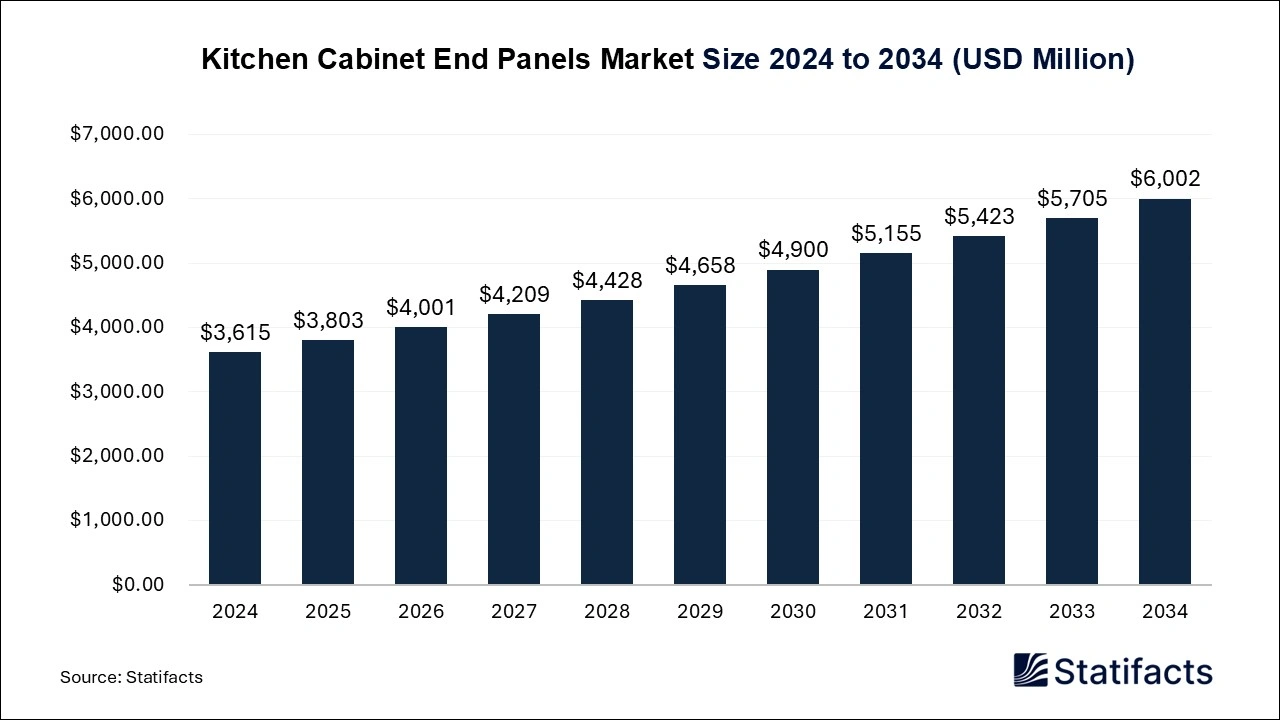
| Reports Attributes | Statistics |
| Market Size in 2025 | USD 3,803 Million |
| Market Size in 2026 | USD 4,001 Million |
| Market Size in 2032 | USD 5,423 Million |
| Market Size by 2035 | USD 6,289 Million |
| CAGR 2026 to 2035 | 5.16% |
| Base Year | 2025 |
| Forecast Period | 2026 to 2035 |
The kitchen cabinet end panel market is growing steadily as demand for modern, modular kitchens continues to rise worldwide. These panels play a key role in enhancing the overall visual appeal of kitchen spaces by offering smooth finishes, refined edges, and a polished look. As consumers increasingly focus on the aesthetic and functional aspects of their homes, kitchen remodeling and renovation activities have surged, directly contributing to market growth.
The popularity of modular kitchens is a major driver of this market. Consumers are now seeking kitchen layouts that are convenient, space-saving, and organized, combining design with practicality. Kitchen cabinet end panels are an essential part of these setups, as they not only add to the visual balance but also protect cabinet interiors from moisture and wear. Growing awareness about interior design, home improvement trends on social media, and the influence of lifestyle-focused content are further fueling demand.
Changing consumer preferences are also encouraging greater customization. Homeowners today prefer designs tailored to their specific tastes, choosing from a wide range of materials, textures, colors, and finishes. This has created new opportunities for manufacturers to offer personalized solutions, from high-gloss and matte finishes to woodgrain and eco-friendly laminates. As a result, the market is seeing increased product variety and innovation.
However, fluctuations in raw material prices remain a challenge. Changes in trade relations between countries often affect the supply and pricing of key materials such as plywood, MDF, laminates, and decorative veneers. These shifts can impact manufacturing costs and slow down market growth, especially in price-sensitive regions. Despite these challenges, the market outlook remains strong due to continuous product advancements and evolving consumer expectations.
Another key trend shaping the market is the shift toward sustainability. Consumers are becoming more conscious of environmental impact and are looking for cabinets and panels made from responsibly sourced, recyclable, or low-emission materials. Manufacturers that invest in sustainable production processes and eco-certified products are likely to gain a competitive advantage. The growing disposable incomes in emerging markets such as India, China, Canada, and Romania are further supporting this trend, as middle-class consumers are increasingly able to afford modern kitchen setups that align with global design standards.
The inclusion of artificial intelligence is bringing additional growth opportunities to the market. AI-powered design tools are helping manufacturers and interior designers create personalized kitchen layouts by visualizing textures, colors, and materials in real time. Consumers can now experiment with virtual designs before making purchase decisions, making the buying experience more interactive. On the production side, manufacturing companies are adopting AI-driven systems for production planning, material optimization, and quality control. This technology improves operational efficiency, reduces waste, and ensures consistent product quality.
Looking ahead, the combination of rising disposable incomes, growing urban housing, and the adoption of smart manufacturing technologies will continue to shape the future of the kitchen cabinet end panels market. With a stronger focus on design, sustainability, and digital innovation, the market is expected to expand steadily in the coming decade.
| Regions | Shares (%) |
| North America | 29.28% |
| Asia Pacific | 20.83% |
| Europe | 18.44% |
| LAMEA | 31.45% |
| Segments | Shares (%) |
| Solid Wood End Panels | 18.53% |
| Plywood End Panels | 49.66% |
| Fiberboard End Panels | 7.17% |
| Others | 26.64% |
| Segments | Shares (%) |
| Residential Kitchens | 57.81% |
| Commercial Kitchens | 42.19% |
Published by Saurabh Bidwai





