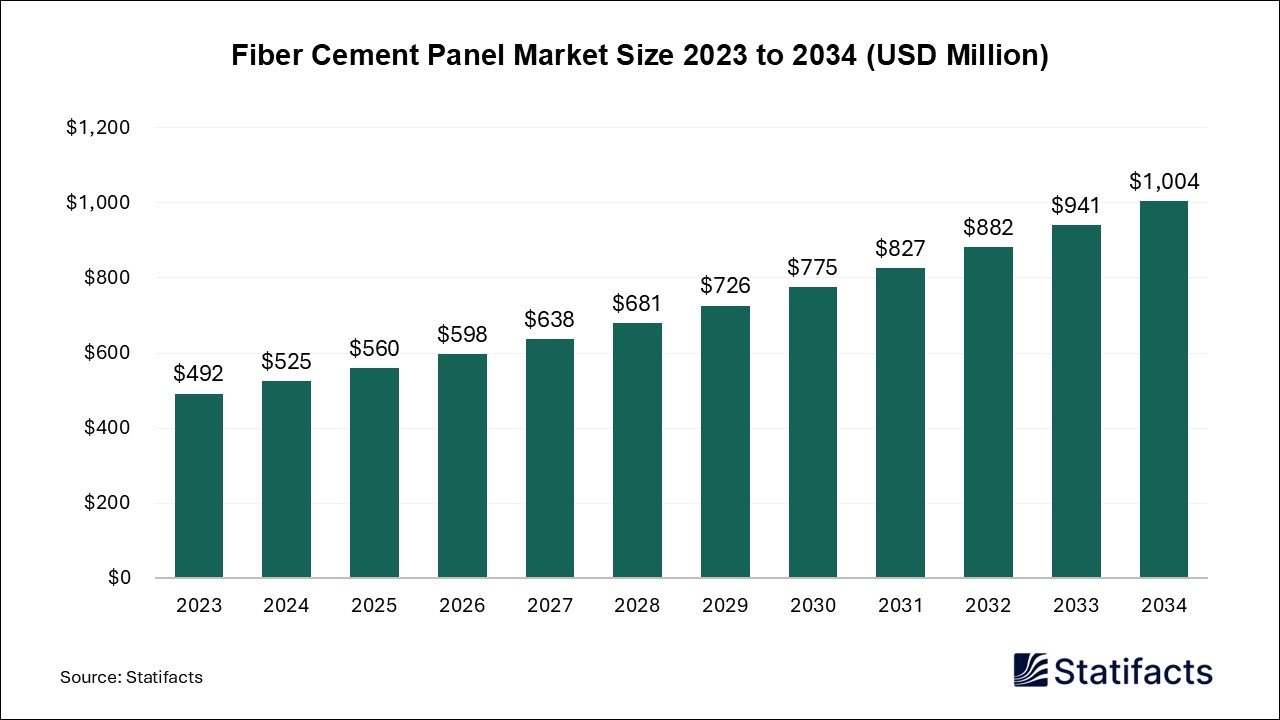
The rise in acceptance of fiber cement boards in commercial and residential sectors, along with growing urbanization and organization expansion, is influencing the market development. As cities develop and modernize, the requirement for fire-resistant, durable and low-maintenance structure resources increases. Fiber cement boards are chosen for their longevity, strength, and ecological benefits, marking them a suitable option for both commercial and residential buildings, further boosting their market growth.
The fiber cement board market expansion is influenced by the growth in the use of fiber cement board in wall cladding, flooring, and prefabricated shelter. Fiber cement boards discover use across homes and pre-fabricated shelters such as walls, roofs, floors, windows & door frames and shelves is the main market trend. Fiber cement boards are eco-friendly and are toxin-free elements in comparison with bricks and mortar used in re-fabricated housing construction. Primarily, gypsum boards were utilized in making pre-fabricated shelters. Fiber cement boards are the best option as these are weather resistance and moisture resistance in comparison to gypsum boards in pre-fabricated shelter buildings influencing the overall demand of the worldwide market.
James Hardie, Etex Group, Cembrit, Allura USA, Mahaphant, Elementia, Everest Industries, Saint-Gobain, Hume Cemboard Industries, Taisyou, Soben board, SCG Building Materials, Kmew, PENNY PANEL, Nichiha, Lato JSC, FRAMECAD, LTM LLC, TEPE Betopan, HEKIM YAPI, Atermit, GAF, China Conch Venture holdings, HeaderBoard Building Materials, Sanle Group, Guangdong Soben Green
By Type
By Application
Published by Saurabh Bidwai