

Share


Europe Generic Drugs Market (By Drug Type: Simple Generics, Super Generics; By Brand: Pure Generic Drugs, Branded Generic Drugs; By Route of Drug Administration: Oral, Injection, Cutaneous, Others; By Therapeutic Application: Central Nervous System (CNS), Cardiovascular, Infectious Diseases, Musculoskeletal Diseases, Respiratory, Oncology, Others; By Distribution Channel: Retail Pharmacy, Hospital Pharmacy, Online and Others) Industry Size, Share, Growth, Trends 2026 to 2035

The Europe generic drugs market was valued at USD 136.44 million in 2025 and is anticipated to reach nearly USD 233.29 million by 2035, advancing at a 5.51% CAGR, supported by rising healthcare cost pressures and increasing availability of affordable therapies.
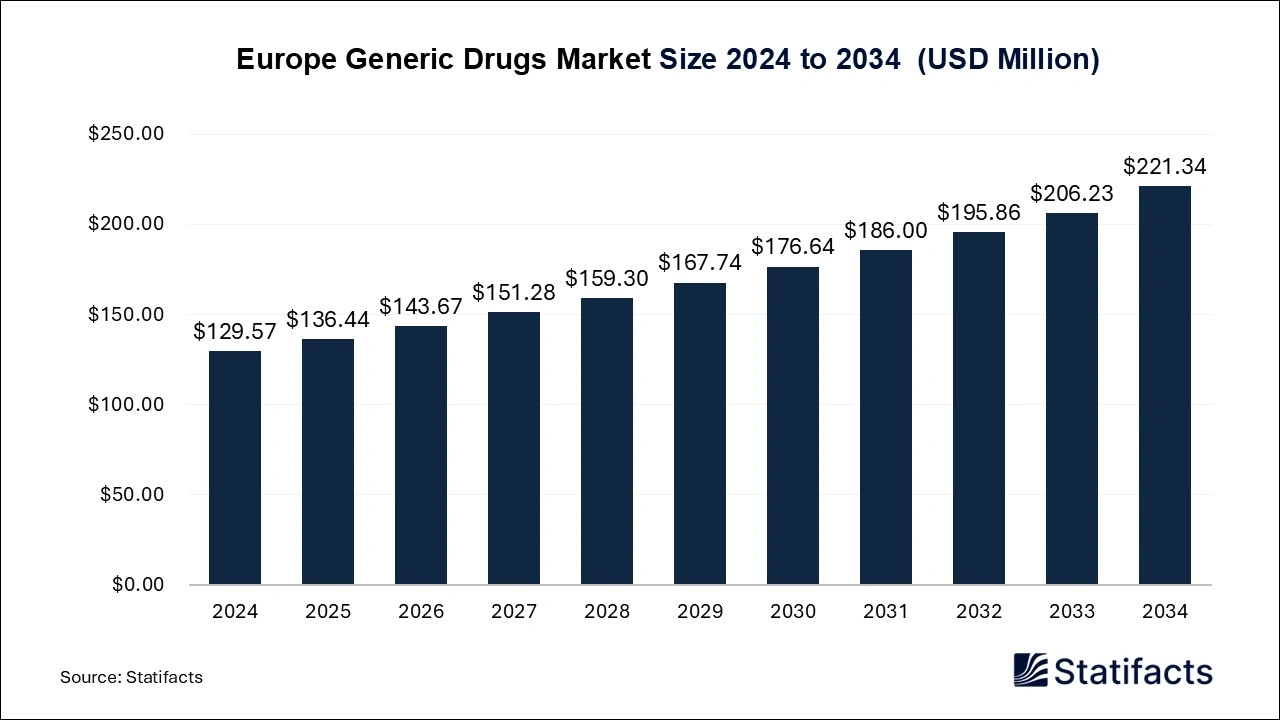
| Reports Attributes | Statistics |
| Market Size in 2025 | USD 136.44 Million |
| Market Size in 2026 | USD 143.67 Million |
| Market Size in 2032 | USD 195.86 Million |
| Market Size by 2035 | USD 233.29 Million |
| CAGR 2026 to 2035 | 5.51% |
| Base Year | 2025 |
| Forecast Period | 2026 to 2035 |
The European generic drugs market is gaining momentum due to the increasing number of aging populations and chronic disease burden in the region, which increases the need for effective and financially sustainable medications. The use of generic drugs is rising at the primary level, enabling these governments to manage their healthcare expenditure without compromising quality. A report from the World Health Organization (WHO) states that the population aged 60 and older in the European region is rapidly increasing, growing from 215 million in 2021 to 247 million by 2030 and to over 300 million by 2050. The authorities, such as EMA, are also supporting higher approval rates to manage drug demand in the region.
The demand for generic drugs has risen sharply in Europe. Still, tendering systems in these countries are forcing manufacturers to reduce the prices of these drugs for contracts, which can hamper their long-term profit margins. Additionally, the region has higher labor and manufacturing costs than other regions, which can hinder business opportunities for emerging small-scale players.
Governments across Europe are actively promoting the use of generic drugs to ensure financial stability in their healthcare budgets. As a result, companies are expected to secure multi-year contracts, which could secure their future and also encourage other companies to invest in the European generic drugs market. The rise of telemedicine and digital pharmacies is also expected to help these countries attract significant business in generic drugs in the future. The mature population base in the European region is also likely to adopt generic medications at a faster rate than in other areas.
The use of technologies such as Artificial Intelligence (AI) and Machine Learning (ML) is expected to play a crucial role in optimizing manufacturing tasks by monitoring granulation, coatings, and other processes. Computer vision technologies help inspect the quality of tablets, injectables, and packaging without errors, compared to human intervention. This further increases the reliability of the human workforce and helps meet supply deadlines. Most companies also use AI to manage all the criteria required for approvals and tenders.
Germany is a crucial player in the European generic drugs market due to a higher chronic disease burden, which is driving increased government investment in cost-effective drugs. The country has a large number of CDMOs for biologics and injectables, making them more popular in domestic manufacturing. The growing demand in oncology and rheumatology is helping attract more investment from companies to establish a business foundation for specialized generic drugs. The country's aging population is also expected to attract several businesses away from tender-based purchasing in the coming years.
France is one of the most opportunistic countries in the European generic drugs market due to higher patient volume, which drives a strong demand for affordable drugs. The French government's policy framework also supports the use of generic drugs prescribed by doctors. Moreover, they are also expected to provide incentives for pharmacies to sell generic medicines at their stores. The country's population is also increasingly accepting generic drugs, which will drive further growth in the future.
| Segments | Shares (%) |
| Simple Generics | 53.22% |
| Super Generics | 46.78% |
| Segments | Shares (%) |
| Pure generic drugs | 42.33% |
| Branded generic drugs | 57.67% |
| Segments | Shares (%) |
| Oral | 34.15% |
| Injection | 26.77% |
| Cutaneous | 23.44% |
| Others | 15.64% |
| Segments | Shares (%) |
| Central Nervous System (CNS) | 14.21% |
| Cardiovascular | 18.35% |
| Infectious Diseases | 12.44% |
| Musculoskeletal Diseases | 16.77% |
| Respiratory | 13.56% |
| Oncology | 16.11% |
| Others | 8.56% |
| Segments | Shares (%) |
| Retail Pharmacy | 46.77% |
| Hospital Pharmacy | 33.44% |
| Online and Others | 19.79% |
Published by Deepa Pandey





