

Share


Asia Pacific Health and Wellness Market (By Type: Products, Services; By Product: Weight Loss Products, Healthy Diet, Sports Nutrition, Vitamin and Dietary Supplements; By Service: Nutrition Services, Healthy Food Delivery, Sleep and Mental Wellness, Fitness, Centres, Equipment and Programs) Industry Size, Share, Growth, Trends 2026 to 2035

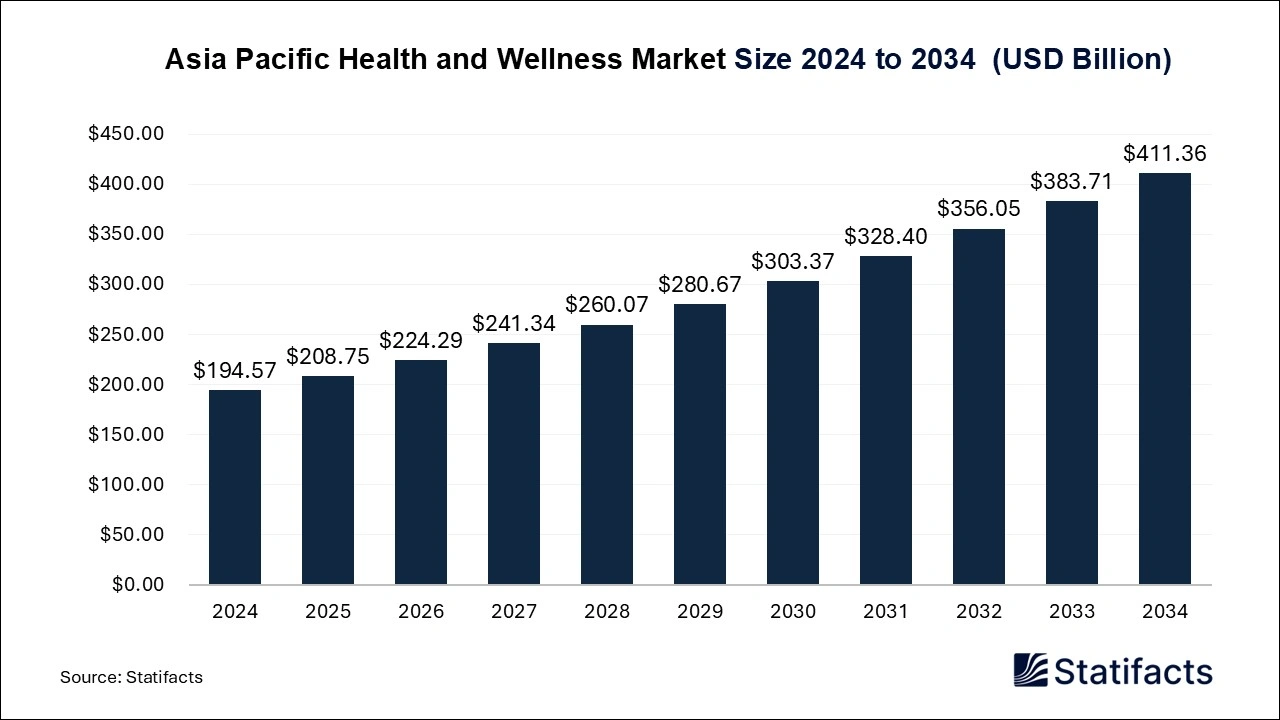
The Asia Pacific health and wellness market was valued at USD 208.75 billion in 2025 and is expected to reach nearly USD 439.02 billion by 2035, expanding at a 7.72% CAGR, driven by rising disposable incomes, preventive healthcare focus, and growing lifestyle awareness.
| Reports Attributes | Statistics |
| Market Size in 2025 | USD 208.75 Billion |
| Market Size in 2026 | USD 224.29 Billion |
| Market Size in 2032 | USD 356.05 Billion |
| Market Size by 2035 | USD 439.02 Billion |
| CAGR 2026 to 2035 | 7.77% |
| Base Year | 2025 |
| Forecast Period | 2026 to 2035 |
Demand is growing due to the increasing prevalence of chronic diseases across the region. According to WHO’s 2023 Noncommunicable Disease Progress Monitor, countries throughout Asia Pacific continue to record rising rates of diabetes, obesity, cardiovascular disease, and hypertension. These conditions have encouraged individuals to adopt healthier diets, engage in physical activity, and use digital tools to monitor sleep and metabolic markers. The Organisation for Economic Co-operation and Development’s 2023 health profile for Asia highlights strong increases in consumer spending on dietary supplements, functional foods, and fitness services, especially in rapidly developing economies.
Mental health awareness is also expanding. According to Japan’s Ministry of Health, Labour and Welfare’s 2023 report, anxiety and stress related symptoms have risen among working adults, contributing to higher demand for meditation apps, stress reduction practices, and community wellbeing programs. Similar trends have been documented by Australia’s Department of Health in its 2023 National Wellbeing Survey, which notes increased participation in counseling services and digital therapy platforms. Widespread smartphone access across Asia has accelerated adoption of wellness apps, wearable devices, and remote coaching tools that support personalized health tracking.
Affordability and uneven infrastructure limit broader wellness adoption. According to WHO’s 2023 South East Asia regional review, there are significant disparities in access to preventive health resources between urban and rural areas. High quality fitness centers, nutrition counseling services, and technologically advanced wellness products are concentrated in metropolitan regions, leaving rural communities with fewer options. In low and middle income countries, wellness services often fall outside national health insurance coverage, which increases out of pocket spending and restricts adoption.
Regulatory variation across the region also presents constraints. Countries have different frameworks for governing supplements, natural health products, wearable devices, and digital wellness platforms. Australia’s Therapeutic Goods Administration’s 2023 compliance update emphasizes ongoing challenges with supplement labeling and quality standards, while India’s Food Safety and Standards Authority issued new 2023 guidelines to strengthen oversight of nutraceuticals and functional foods. These differences influence consumer trust and affect cross border product availability. Workforce gaps in nutritional science, mental health support, and lifestyle medicine are additional barriers, although AI supported coaching platforms and mobile health solutions are beginning to expand access.
Asia Pacific is one of the most diverse wellness markets globally. Countries such as China, Japan, South Korea, Singapore, and Australia have advanced wellness ecosystems characterized by strong private sector innovation and high consumer adoption of digital health tools. According to OECD’s 2023 Asia Pacific outlook, demand for fitness services, plant based diets, and preventive health assessments continues to grow across higher income countries. Meanwhile, emerging economies across Southeast Asia are experiencing increased adoption of wellness practices due to urbanization, rising incomes, and government supported health promotion programs.
Governments in the region are investing heavily in lifestyle related health initiatives. For instance, Singapore’s Ministry of Health launched extended preventive health initiatives in 2023 that promote active living, balanced nutrition, and early screening for chronic diseases. India’s National Health Authority has emphasized digital health expansion through its 2022 and 2023 policy updates, which support remote monitoring and fitness tracking. AI enabled wellness platforms, digital physiotherapy tools, and personalized nutrition algorithms are becoming more common in technologically advanced markets such as Japan, Australia, and South Korea.
China remains one of the largest and fastest expanding wellness markets in Asia Pacific due to rising healthcare awareness and significant investment in preventive solutions. According to China’s National Health Commission’s 2023 national health statistics, chronic conditions such as diabetes, hypertension, and obesity continue to rise, which has encouraged greater interest in fitness programs, nutrition management, and digital health applications. Urban consumers increasingly use wearable devices, AI enhanced wellness apps, and personalized diet plans. The government continues to promote physical activity and healthy eating through national campaigns, although access disparities persist in rural regions where wellness facilities are limited.
India’s health and wellness market is expanding due to demographic changes, increasing lifestyle diseases, and growing interest in preventive healthcare. According to India’s Ministry of Health and Family Welfare’s 2023 health profile, the country has experienced rising rates of diabetes and cardiovascular disease, which has strengthened consumer adoption of exercise routines, plant based diets, and digital health tools. Major cities are seeing rapid growth in fitness centers, yoga studios, and remote wellness coaching platforms. Government initiatives, including the Fit India Movement and digital health expansion programs, support greater awareness of active living. Rural access remains limited, but mobile health platforms and AI supported wellness applications are helping bridge gaps.
| Segments | Shares (%) |
| Products | 60% |
| Services | 40% |
| Segments | Shares (%) |
| Weight Loss Products | 30% |
| Healthy Diet | 25% |
| Sports Nutrition | 20% |
| Vitamin and Dietary Supplements | 25% |
| Segments | Shares (%) |
| Nutrition Services | 35% |
| Healthy Food Delivery | 25% |
| Sleep and Mental Wellness | 20% |
| Fitness, Centres, Equipment and Programs | 20% |





